
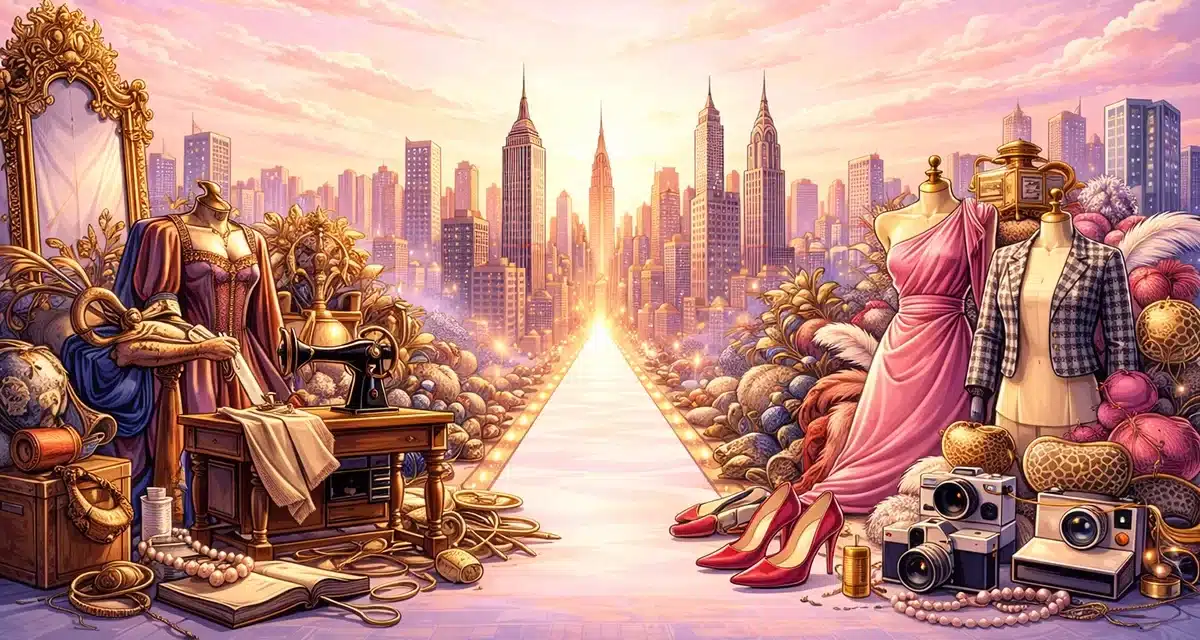
Fashion did not begin as self-expression.
It began as structure. Long before runways, brands, or seasonal collections, clothing marked status, labor, gender roles, climate, and access to material resources. Over time, those practical and social functions accumulated symbolism. Fabric choices signaled power. Silhouettes communicated obedience or defiance.
Dress became language.
Every city, designer, house, and cultural shift branches outward from the same core question.
Does fashion come from within the individual, or from forces outside the self?
Fashion forms where personal identity and external systems meet.
Neither side operates alone.
Table of Contents
Fashion Before Fashion
Clothing existed long before fashion became an industry.
Early dress reflected environment, available materials, trade routes, and labor specialization. Linen, wool, silk, leather, and later cotton followed geography and climate. Early societies did not chase novelty. They maintained continuity.
In ancient civilizations, clothing also reinforced hierarchy.
Sumptuary laws controlled who could wear certain fabrics, colors, or adornments. Dress signaled class and political legitimacy rather than taste. Expression mattered less than compliance.
Even in these early systems, individual variation existed.
Artisans modified cuts. Elites commissioned unique garments. Personal distinction appeared, but always within imposed boundaries.
Courts, Power, and Visibility
Fashion accelerated once centralized power demanded visibility.
Royal courts transformed dress into political spectacle.
Clothing signaled loyalty, proximity to authority, and economic strength.
France provides the most studied example, but similar patterns appeared across Europe and Asia.
The court set standards. The elite copied them. The public followed at a distance.
This hierarchy created imitation cycles that still define fashion systems today.
At this stage, fashion moved from utility toward performance.
Clothing began to matter because it was seen.
Industrialization and Scale
The industrial age changed fashion more than any single aesthetic movement.
Mechanized production increased speed, reduced cost, and introduced scale. Clothing shifted from bespoke creation to repeatable goods. Access widened. Class distinctions blurred.
With scale came standardization. With standardization came choice.
Fashion emerged as an organizing system for variation within mass production.
Ready-to-wear did not erase individuality. It reframed it. Consumers selected from offered options rather than commissioning originals. Personal style became curatorial rather than artisanal.
Cities as Fashion Engines
Fashion consolidated around cities once production, media, and finance aligned geographically.
Urban centers provided labor, capital, trade access, and cultural density.
Over time, specific cities developed recognizable fashion identities:
- Paris formalized couture and prestige
- Milan aligned craftsmanship with industrial output
- London pushed subculture, experimentation, and dissent
- New York prioritized function, mobility, and modern lifestyles
These identities were not accidents.
They reflected economic structure, social values, and historical timing.
Designers, Names, and Authorship
Fashion changed again once names carried value.
The rise of the designer shifted attention from garments to authorship. Houses became brands. Personal vision gained commercial weight.
Designers did not invent fashion in isolation.
They interpreted conditions already present. Materials, technology, social change, and consumer readiness shaped what succeeded.
The myth of the lone genius persists, but history shows a pattern of alignment rather than invention.
Media, Models, and Multiplication
Fashion required amplification to sustain itself.
Photography, magazines, runway shows, and later digital platforms expanded reach. Models became intermediaries between garment and public imagination.
Media turned seasonal output into cultural narrative.
Visibility transformed fashion into aspiration. Repetition normalized novelty. Coverage created legitimacy.
Once fashion entered mass media cycles, it could no longer exist without them.
Globalization and Compression
Late twentieth-century fashion became global, fast, and interconnected.
Supply chains stretched across continents. Trends spread instantly. Production accelerated. Consumption increased.
Local identity remained important, but influence flowed in multiple directions at once.
Subcultures influenced luxury. Streetwear entered high fashion. Traditional boundaries weakened.
Fashion no longer traveled one way.
Fashion as System
Fashion today operates as an interdependent system, not a linear trend cycle.
Economics, technology, culture, identity, and media interact constantly. Individual expression exists inside these structures, not outside them.
Feeling remains central. Choice still matters. Expression persists.
But fashion does not emerge from the self alone. It responds to context.
The Central Question
Does fashion come from within, or from outside forces?
History shows it forms at the boundary between both:
- Personal identity initiates interest
- External systems shape possibility
- Visibility determines influence
- Repetition defines acceptance
Fashion exists where feeling meets structure.
The History of Fashion Q&A
Is fashion primarily personal expression?
It functions as expression, but expression occurs within cultural and economic limits.
Do designers lead fashion change?
Designers translate existing conditions into form.
Timing and context matter as much as vision.
Why do fashion cities matter so much?
Cities concentrate production, media, capital, and audiences.
That concentration accelerates influence.
Is fashion cyclical or progressive?
It repeats silhouettes and references, but structures evolve.
Cycles occur within changing systems.
Does fashion lose meaning at scale?
Meaning shifts rather than disappears.
Mass visibility changes how symbols function.
Does fashion exist for everyone?
Fashion exists unevenly.
Full participation requires surplus time, disposable income, and access to visibility.
Without those conditions, clothing serves function first.
What separates clothing from fashion?
Clothing fulfills need.
It protects, covers, and supports labor.
Fashion emerges only when survival requirements are met and choice becomes possible.
Is fashion an elite concept?
Historically, yes.
Fashion developed where resources exceeded necessity. Courts, cities, and later consumer classes shaped fashion because they could afford variation beyond function.
Do people without means participate in fashion at all?
They participate indirectly.
Functional dress may later be adopted, stylized, and rebranded by those with access to platforms and capital.
Is form without choice still fashion?
No.
Form alone does not constitute fashion. Fashion requires selection, repetition, and recognition. Without choice, clothing remains utility.
Does this mean fashion is exclusionary by nature?
In practice, yes.
Even when trends appear universal, access determines influence. Fashion expands outward, but it originates where privilege allows excess.