Pukwudgies originate in Indigenous oral histories of the northeastern United States, where they were described as real, dangerous, and autonomous beings.
Accounts of Pukwudgies appear most prominently in the traditions of the Wampanoag, Narragansett, and other Algonquian-speaking peoples of the region now known as New England.
These beings were not framed as fairy-tale creatures or symbolic spirits. They were described as physical entities that occupied forests, swamps, and rocky terrain and interacted directly with humans.
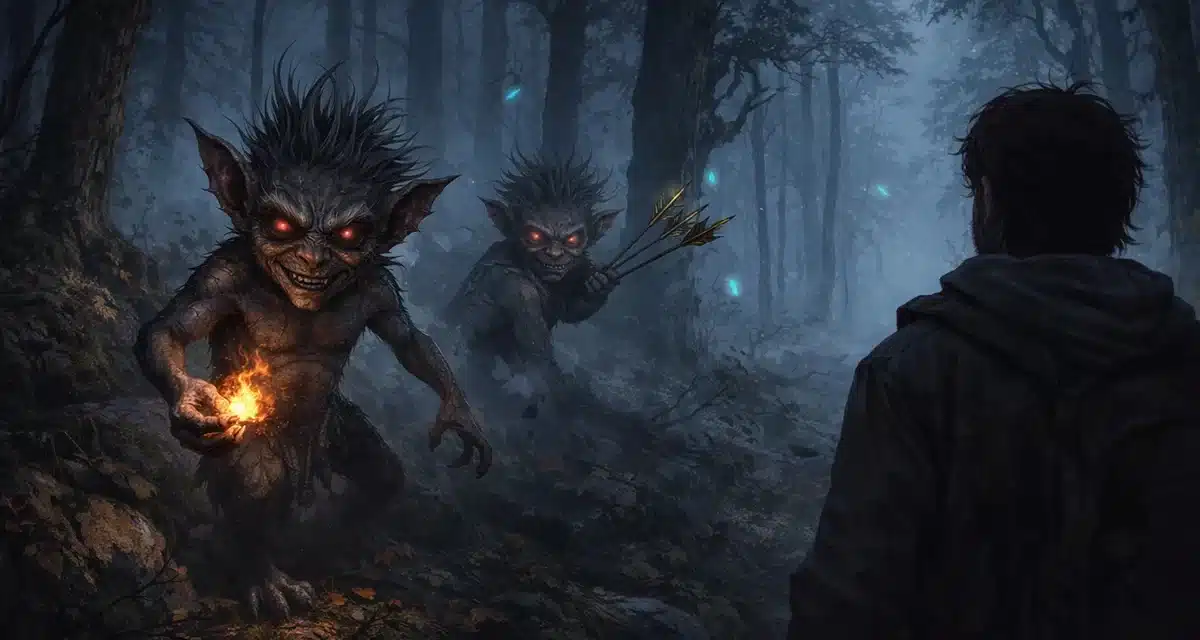
Early descriptions portray Pukwudgies as short-statured humanoid beings, typically two to three feet tall, covered in gray or dark hair, and capable of moving silently through dense woodland.
They were credited with intelligence, intention, and memory.
Importantly, they were not portrayed as neutral forces of nature.
They were willful and capable of cruelty.
In Indigenous narratives, Pukwudgies were often said to have once cooperated with humans before turning hostile.
This shift is a recurring theme.
The hostility was not random.
It followed perceived disrespect, overreliance, or attempts to dominate. As a result, the stories functioned as warnings rather than entertainment.
The name “Pukwudgie” itself reflects later transliteration into English. Variations existed across languages and communities, but the central description remained consistent: a small, powerful forest-dwelling being that posed a real threat when encountered.
Table of Contents
Physical Characteristics and Reported Abilities
Pukwudgies are consistently described as small humanoid beings with disproportionate strength and unnatural abilities.
Descriptions of Pukwudgies remain notably consistent across time and geography. Observers emphasized movement, behavior, and interaction rather than ornamental detail.
These accounts were shaped by fleeting encounters rather than sustained observation.
Commonly reported physical traits include:
- Height ranging from two to three feet
- Broad torsos with relatively short limbs
- Gray, brown, or dark hair covering most of the body
- Large noses and deep-set eyes
- Smooth, grayish skin visible beneath hair
Beyond physical appearance, Pukwudgies were credited with abilities that exceeded those of ordinary animals or humans of similar size.
They were described as capable of disappearing at will, moving between locations rapidly, and surviving injuries that would incapacitate a human.
Frequently attributed abilities include:
- Invisibility or sudden disappearance
- The capacity to push or disorient humans without being seen
- Limited shapeshifting or illusion creation
- Control over fire or poison in rare accounts
These abilities were not described in exaggerated or fantastical language. They were presented matter-of-factly, often in the same tone used to describe dangerous animals or environmental hazards.
This restrained framing distinguishes these accounts from later folkloric embellishment.
Behavioral Patterns and Human Interaction
Pukwudgies are depicted as hostile toward humans, engaging in harassment, deception, and direct violence.
Unlike many supernatural figures presented as mischievous or morally ambiguous, Pukwudgies were frequently described as actively malicious.
Indigenous accounts emphasize avoidance rather than negotiation or appeasement.
Reported behaviors include:
- Leading travelers off established paths
- Pushing individuals from cliffs or steep embankments
- Causing disorientation through sound or movement
- Sabotaging tools or shelters
- Attacking animals and occasionally humans
Pukwudgies were described as territorial. Encounters often occurred near swamps, deep forests, boulder fields, or riverbanks.
These locations were already considered hazardous, and the presence of Pukwudgies reinforced existing avoidance practices.
Importantly, the stories do not frame humans as heroic participants.
Humans are vulnerable and often harmed. Survival depends on caution, humility, and distance rather than confrontation. This framing reinforces the practical function of the narratives.
Regional Concentration and Geographic Consistency
Reports of Pukwudgies are geographically concentrated in southern New England and adjacent regions.
The strongest concentration of accounts appears in areas now encompassing Massachusetts, Rhode Island, and Connecticut.
These regions align closely with the historic territories of Algonquian-speaking peoples who recorded or transmitted the stories.
Certain landscapes recur in accounts:
- Dense forests with limited visibility
- Rocky hills and glacial erratics
- Wetlands and swamp systems
- River corridors used for seasonal travel
Modern place-based folklore often associates Pukwudgies with specific landmarks, including forests and conservation areas.
One of the most frequently referenced locations is Freetown–Fall River State Forest, where numerous modern sightings and incidents have been reported.
Geographic consistency supports the interpretation of Pukwudgies as place-based narratives tied to specific environments rather than generalized mythic beings.
Transition Into Colonial Folklore
Colonial-era retellings altered Indigenous accounts by reframing Pukwudgies as folklore rather than environmental threats.
As European settlers expanded into New England, Indigenous narratives were recorded, summarized, or reinterpreted through unfamiliar cultural frameworks.
Pukwudgies were frequently grouped with European concepts of fairies, goblins, or dwarfs, despite significant differences in behavior and meaning.
This reframing introduced several distortions:
- Emphasis on whimsy rather than danger
- Loss of regional specificity
- Removal of practical survival context
- Moralization of stories unrelated to original purpose
By the nineteenth century, Pukwudgies appeared in local folklore collections as curiosities rather than warnings. This transition reduced their perceived seriousness and encouraged skepticism rooted in literary rather than anthropological evaluation.
Despite this shift, local oral traditions often preserved the original tone. In rural areas, stories continued to circulate without romanticization.
Modern Sightings and Contemporary Claims
Reports of Pukwudgie encounters continue into the modern era, often in wooded or protected areas.
Modern accounts vary in credibility but share notable similarities with earlier descriptions.
Witnesses often describe brief encounters involving small humanoid figures, sudden feelings of unease, or unexplained physical contact.
Common elements of modern reports include:
- Sightings during dusk or early evening
- Encounters near trails or isolated paths
- Sudden loss of orientation or time
- Physical sensations such as being shoved
Many reports originate from hikers, hunters, or residents familiar with local terrain. These individuals often emphasize their inability to explain the experience through known wildlife behavior.
Media attention has expanded public awareness but introduced noise.
Online forums and paranormal programming often exaggerate or combine unrelated traditions, obscuring the original cultural framework.
No physical evidence has been documented. As with other localized folklore phenomena, the absence of evidence reflects the fleeting nature of encounters rather than confirmation or dismissal.
Interpretive Frameworks and Scholarly Perspectives
Scholars approach Pukwudgie accounts through cultural, psychological, and environmental lenses.
Anthropological interpretations emphasize the role of Pukwudgie stories in reinforcing territorial boundaries and environmental caution. The narratives discourage solitary travel, trespassing, and overconfidence in unfamiliar terrain.
Psychological interpretations focus on misperception under stress, particularly in environments that produce sensory ambiguity.
Dense forests, uneven ground, and low light conditions can distort scale and movement.
Environmental explanations suggest encounters with wildlife, combined with cultural expectation, as a contributing factor.
However, no commonly cited animal matches the described combination of size, shape, and behavior.
Each framework addresses certain aspects but none fully account for the persistence, specificity, and consistency of the narratives over centuries.
Cultural Persistence and Contemporary Relevance
Pukwudgies remain a culturally significant regional narrative rooted in place rather than spectacle.
The endurance of Pukwudgie stories reflects continuity rather than revival. These narratives persist where the landscape itself remains relatively unchanged. Forests, wetlands, and rocky terrain continue to shape human movement and perception.
Unlike mass-market folklore figures, Pukwudgies are rarely commercialized.
Their presence remains understated, referenced primarily in local context or Indigenous discourse.
This persistence suggests that the narrative serves an enduring descriptive function tied to geography and human vulnerability.
Pukwudgies Q&A
Are Pukwudgies considered mythological beings?
They are treated by scholars as culturally grounded entities described as real within Indigenous traditions.
Where are Pukwudgies most commonly reported?
Southern New England, particularly forested and swamp-adjacent areas.
Do Pukwudgies appear in Indigenous stories outside New England?
Similar beings appear in related traditions, but the Pukwudgie is regionally specific.
Are modern sightings considered credible?
Some reports come from experienced outdoors individuals, but no physical evidence exists.
Why were Pukwudgies feared rather than revered?
They were described as hostile and unpredictable, posing direct danger to humans.
Have any scientific investigations confirmed their existence?
No verified biological evidence has been produced.