
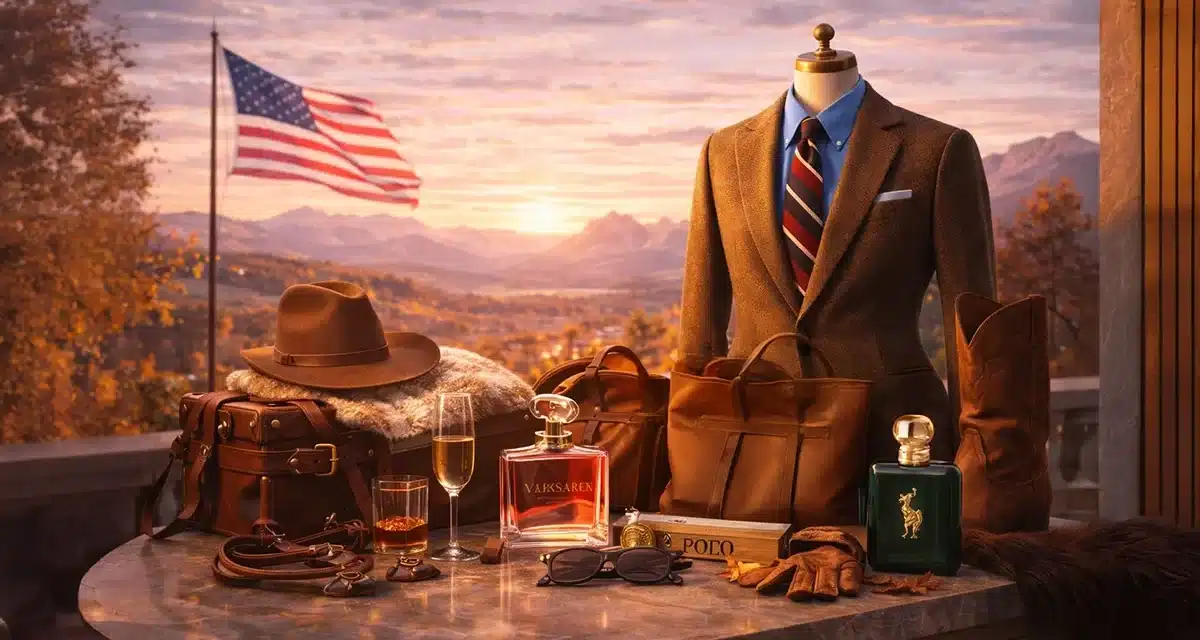
Ralph Lauren reshaped modern fashion by treating clothing as narrative infrastructure.
His influence did not depend on technical disruption or seasonal innovation. It emerged from constructing a coherent myth of American life and reproducing it consistently across products, media, and environments.
Fashion became immersive rather than episodic.
Lifestyle replaced collection as the organizing unit.
Table of Contents
American Fashion Before Ralph Lauren
Mid-twentieth-century American fashion lacked a unified symbolic identity beyond functionality.
Prior to Ralph Lauren’s ascent, American clothing emphasized practicality, separation, and category specificity. Sportswear, tailoring, casual wear, and formal dress operated in parallel tracks.
Brands communicated product attributes rather than worldview.
This fragmentation reflected social reality.
The United States lacked a shared aristocratic past, centralized court culture, or inherited visual codes comparable to European fashion systems.
Authority rested in utility and industrial efficiency, not heritage storytelling.
American fashion worked. It did not yet speak.
Constructing an American Myth
Ralph Lauren established a symbolic past to anchor modern consumption.
Rather than documenting lived American history, Lauren curated an idealized narrative.
East Coast leisure, equestrian culture, collegiate tailoring, Western imagery, and aspirational domestic spaces combined into a unified vision.
This myth functioned regardless of factual accuracy.
It relied on internal consistency rather than historical precision. The narrative suggested continuity, stability, and permanence.
Myth-making provided emotional coherence where history did not.
Narrative as system
The brand’s coherence depended on disciplined repetition across all outputs.
Key narrative devices included:
- Equestrian symbolism and country references
- Ivy League tailoring cues
- Rustic textures paired with refinement
- Neutral palettes signaling restraint and longevity
Each reinforced the same imagined lifestyle.
Americana as Exportable Identity
Americana under Ralph Lauren became a global commodity rather than national artifact.
The brand translated American imagery into universally legible signals of comfort, order, and privilege. Polo shirts, blazers, denim, and knitwear communicated belonging without requiring cultural proximity.
This translation mattered structurally.
American fashion gained symbolic authority abroad through constructed tradition rather than industrial advantage.
Americana shifted from local expression to international shorthand.
Lifestyle Branding Over Product Design
Ralph Lauren reframed fashion brands as total environments rather than seasonal outputs.
Collections extended beyond clothing into home furnishings, fragrance, accessories, and architecture. Stores functioned as physical manifestations of the brand narrative.
The consumer entered a world rather than purchased an item.
This expansion relied on operational clarity:
- Consistent visual identity across categories
- Predictable quality standards
- Controlled retail environments
- Gradual category expansion aligned with narrative
Lifestyle branding replaced novelty as retention mechanism.
Control, Consistency, and Longevity
Brand power depended on maintaining coherence rather than chasing change.
Ralph Lauren resisted rapid aesthetic shifts. Evolution occurred incrementally.
Archives mattered as much as innovation.
The brand avoided irony, commentary, or cultural volatility.
Consistency protected trust.
Trust supported scale. Scale reinforced legitimacy.
This discipline sustained relevance across decades.
Social Class and Aspirational Access
The brand democratized aspiration without equalizing status.
Products ranged across price tiers, enabling broad participation in the narrative.
Entry points provided symbolic access.
Higher tiers preserved distinction.
This structure operated deliberately.
Aspiration expanded reach while hierarchy remained intact.
Lifestyle suggested inclusion. Structure preserved separation.
Influence on Global Fashion Systems
Ralph Lauren’s model redefined branding strategy across the industry.
Fashion houses increasingly emphasized storytelling, environmental design, and cross-category coherence.
The focus shifted from isolated garments to sustained identity systems.
The legacy appears in:
- Brand worlds replacing collections
- Heritage narratives shaping marketing
- Retail spaces functioning as narrative devices
- Consistency prioritized over experimentation
Fashion adopted narrative architecture.
Ralph Lauren Q&A
What distinguishes Ralph Lauren from other American designers?
The construction of a unified lifestyle narrative that extends beyond clothing.
Is Ralph Lauren’s Americana historically accurate?
No. It is curated mythology designed for coherence and repetition.
Why did lifestyle branding succeed commercially?
It increased consumer attachment by embedding products within a broader identity system.
Did the brand prioritize innovation or consistency?
Consistency. Incremental change preserved trust and long-term relevance.
Does lifestyle branding reduce fashion to marketing?
No. It restructures how design, retail, and narrative interact systemically.
What defines Ralph Lauren’s lasting impact on fashion?
The transformation of fashion brands into immersive identity platforms rather than seasonal design outputs.