Burlington County developed around river trade, agriculture, transportation routes, and a long tradition of planned settlement.
Located along the Delaware River in southern New Jersey, Burlington County stretches from historic riverside towns to pine forest and farmland.
It has a distinct geographic profile—its western edge is tied to river trade and early urban development, while its eastern half extends deep into the Pinelands. Over time, the county has been shaped by Quaker settlement, agricultural innovation, military installations, and a transportation corridor that links Philadelphia to coastal New Jersey.
Table of Contents
Early Settlement and Cultural Foundations
The Lenape people lived throughout the region long before Europeans arrived, making use of the river, wetlands, and forested uplands for seasonal travel and trade.
Lenape settlements followed waterways, especially along the Delaware River and its tributaries. The environment supported fishing, hunting, gathering, and small-scale agriculture. These patterns shaped how later roads and communities formed.
Quaker Arrival and Burlington Town
European Quakers settled the area in the 1670s, establishing Burlington as one of New Jersey’s earliest organized communities.
Planned streets, meeting houses, and open commons reflected Quaker values emphasizing order, mutual responsibility, and local governance.
A Colonial Center
By the early 18th century, Burlington served as a political and cultural center for West Jersey. Its riverfront location supported:
- Trade with Philadelphia and Delaware River ports
- Craft workers and merchants
- Early religious and civic institutions
The town grew because the river connected it, not because it stood alone.
Revolutionary and Early American Period
Burlington County played a role in military movement, supply support, and local governance during the American Revolution.
Its river crossings and roads positioned it between active military zones. Local meetings debated independence, supply distribution, and community safety.
Historic Sites
- Burlington City Historic District preserves buildings linked to early Quaker life.
- Mount Holly became an important administrative and commercial center.
- Nearby skirmish sites demonstrate strategic movement through the region.
These surviving structures provide a direct link to the county’s early public life.
Agriculture, Mills, and Rural Industry
Farm production has been central to Burlington County’s identity from settlement through the present.
The county’s soils, wetlands, and forests supported a range of agricultural industries.
Cranberries and Blueberries
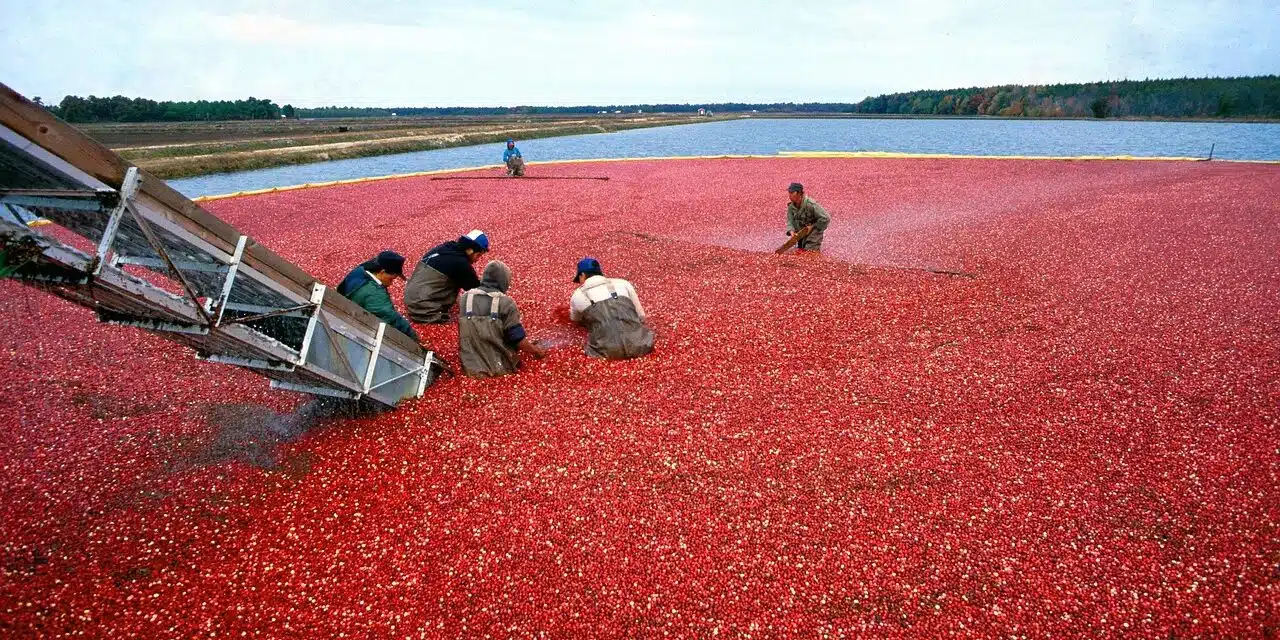
The eastern portion of the county lies within the New Jersey Pine Barrens, where sandy acidic soils supported crops not easily grown elsewhere. Burlington County became a national center for cranberry and later blueberry cultivation. Many family-owned farms continue to operate, with harvest seasons that draw both regional interest and agricultural research.
Milling and River Trade
Rivers and creeks powered mills that processed:
- Grain
- Timber
- Iron products
- Agricultural goods for export
Riverside towns grew around these mills, evolving into small commercial districts with close ties to water transport.
Transportation, Railroads, and Mobility
Transportation networks deeply influenced how Burlington County developed across two very different geographies—river towns and inland pine regions.
The Delaware River provided early transport. Later, canals and railroads connected the county to Philadelphia, Camden, Trenton, and coastal New Jersey.
Rail and Road Influence
- Rail corridors supported manufacturing in Mount Holly and Burlington City
- Trolley and rail service enabled commuting into Philadelphia
- U.S. Route 206 and the New Jersey Turnpike increased suburban development
The northeastern corridor running through the county still links residents to major employment centers.
Military, Industry, and Federal Footprint
The county has long hosted military installations that shaped employment and regional structure.
The Joint Base McGuire-Dix-Lakehurst, located partly in Burlington County, remains a major military and aviation facility.
Regional Impact
- Stable employment base
- Support systems for military families
- Air mobility and logistics training
The military presence continues to influence the county’s economy and demographic patterns.
Contemporary Burlington County
Today the county blends historic towns, agricultural production, preserved natural areas, and suburban communities with commuter connections.
Population centers tend to cluster near major roadways, while large tracts of protected Pine Barrens remain undeveloped and ecologically significant.
Towns and Communities
- Moorestown: Known for residential neighborhoods, schools, and corporate campuses.
- Medford: Historic town center bordered by protected forest areas.
- Mount Laurel: Suburban center near major highways and office developments.
- Burlington City: Waterfront historic district with civic and cultural institutions.
Pinelands and Conservation
The New Jersey Pinelands National Reserve covers much of the eastern county. This protected region:
- Preserves pine forest ecology
- Supports cranberry and blueberry farms
- Maintains low-density development
It is one of the largest remaining open natural areas in the northeastern United States. The county holds both quiet inland space and active suburban corridors without losing either identity.
Things to Do for Visitors and Residents
Burlington County offers historical sites, farm experiences, small town centers, and nature exploration.
Recommended experiences:
- Walk historic Burlington City waterfront streets
- Visit cranberry farms or seasonal agriculture tours in autumn
- Explore Smithville Park and the surrounding trails
- Visit the Burlington County Farmers Market in Moorestown area
- Spend time in Medford Village for local shops and events
- Hike Pinelands trails or paddle quiet cedar rivers
The region invites slow exploration rather than quick sightseeing.
Final Thought
Burlington County’s identity reflects a long relationship with land, water, and movement.
Its riverfront towns speak to early colonial settlement and trade. Its Pine Barrens agricultural tradition remains active and distinctive. Its suburban centers connect residents to surrounding regions while maintaining local character. The county holds historic continuity without staging it—it’s visible in how communities live, work, and maintain their landscapes today.
Its history is practical, grounded, and still present.