
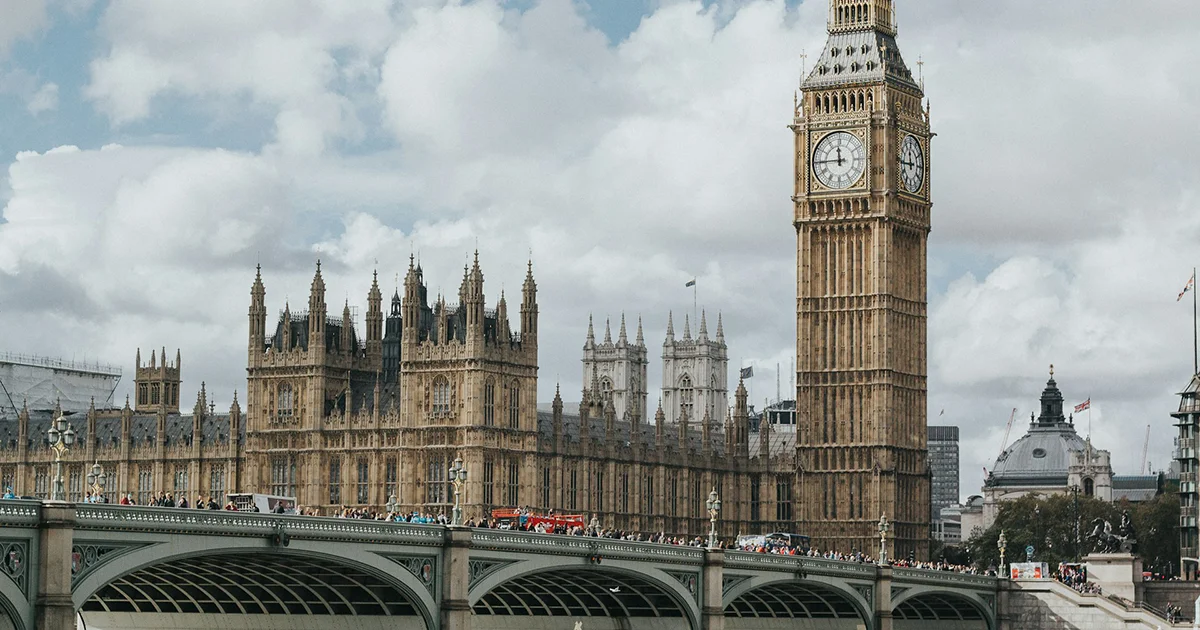
The United Kingdom functions as a highly concentrated state whose global influence flows through a small number of specialized centers rather than evenly across its territory.
Its political geography reflects centuries of imperial administration, financial consolidation, and cultural broadcasting, followed by only partial decentralization in the modern era.
Unlike federal systems that distribute authority by design, the UK aggregates power in London and allows other cities and nations to operate as functional satellites with distinct but limited autonomy.
Table of Contents
London: The Overconcentrated Core
London operates as the United Kingdom’s dominant political, financial, legal, and cultural center simultaneously.
London concentrates more national power than any other city in Western Europe relative to its country.
Parliament, central government ministries, global finance, legal arbitration, media headquarters, and elite cultural institutions all cluster within the capital.
Historically, London developed as the administrative and commercial heart of an empire rather than a nation-state.
Its institutions were designed to manage global flows of capital, labor, contracts, and information.
When empire receded, those institutions remained intact and continued to compound.
London’s core power functions include:
- Global financial markets and currency trading
- International contract law and arbitration
- National political decision-making
- Cultural export through media, fashion, and publishing
- Elite credentialing via universities and professional institutions
London’s dominance sustains Britain’s global relevance.
At the same time, it draws talent, capital, and institutional attention away from the rest of the country, creating persistent regional imbalance.
Southeast England: The Capital’s Support Zone
Southeast England functions primarily as London’s operational hinterland rather than an independent power region.
The surrounding counties, along with cities such as Oxford and Cambridge, supply research, education, infrastructure, and skilled labor pipelines that reinforce London’s dominance rather than dilute it.
This region benefits economically from proximity to the capital, but its institutions tend to feed inward.
Power accumulates rather than circulates.
Key characteristics of the southeast include:
- Elite higher education feeding national and global institutions
- Transport and logistics systems optimized for London access
- High property values driven by capital proximity
- Limited independent political or cultural gravity
The southeast amplifies London’s power while lacking a distinct national role of its own.
Manchester: Cultural Reach Without Capital Control
Manchester serves as the United Kingdom’s strongest non-London cultural and media center.
Manchester originated as an industrial powerhouse and later rebuilt around broadcasting, universities, sport, and urban identity.
Unlike many post-industrial cities, Manchester developed new national relevance rather than relying on legacy status.
The city exerts influence through:
- National and international media production
- Music and cultural export
- Sport as a global branding mechanism
- Higher education and research
- Urban regeneration as a policy model
Manchester’s limitation is structural rather than cultural.
Capital allocation, financial authority, and national decision-making remain London-centered.
Manchester produces influence, but it does not control the systems that scale it.
Birmingham and the Midlands: Functional Power Without Narrative Weight
The Midlands anchor the United Kingdom’s internal economy and physical connectivity.
Birmingham historically functioned as Britain’s manufacturing workshop.
Today, the wider Midlands region remains central to logistics, transport infrastructure, and advanced production.
The region’s influence lies in:
- National supply chains and logistics
- Rail and road connectivity between regions
- Manufacturing and applied engineering
- Domestic economic cohesion
The Midlands play a structural role rather than a symbolic one.
They keep systems running but rarely define how the country is perceived or represented internationally.
Scotland: Parallel Institutions and Retained Legitimacy
Scotland operates with a distinct institutional framework rather than delegated regional authority.
Scotland maintains its own legal system, education traditions, and civic culture.
This institutional continuity predates the modern UK and continues to shape Scottish political and cultural life.
Edinburgh anchors finance, law, and governance, while Glasgow contributes industrial history, cultural production, and political energy.
Scottish influence persists through:
- Independent legal and educational legitimacy
- Strong civic and intellectual traditions
- Cultural confidence not dependent on London validation
This retained institutional identity explains Scotland’s enduring political distinctiveness within the UK system.
Wales: Cultural Continuity Over Structural Power
Wales contributes cultural and linguistic continuity rather than concentrated economic authority.
Wales retains a strong national identity rooted in language, media, and local governance.
Cardiff functions as an administrative center, but national economic power remains limited.
Welsh influence is primarily:
- Cultural and linguistic preservation
- Civic and regional media
- National identity formation within a constrained structure
Wales reinforces the multinational character of the UK without functioning as a major power node.
Northern Ireland: Political Significance Through Constraint
Northern Ireland shapes UK policy through constitutional and diplomatic complexity rather than scale.
Northern Ireland carries disproportionate political significance due to peace agreements, border frameworks, and identity governance.
Its influence operates through:
- Constitutional negotiation
- Cross-border diplomacy
- Security and institutional stability requirements
Northern Ireland limits policy choices rather than directing them, giving it sustained relevance despite modest economic weight.
How British Power Is Structured
The United Kingdom concentrates global power while fragmenting domestic authority.
Unlike continental systems that balance cohesion and regional autonomy, the UK relies on London for international reach and allows regional centers to specialize beneath it.
This model produces:
- Strong global influence
- Cultural export at scale
- Institutional continuity
It also produces:
- Regional economic imbalance
- Political tension between center and periphery
- Uneven national development
United Kingdom Structure Q&A
Why is London so dominant compared to other UK cities?
Imperial history, financial consolidation, and centralized governance reinforced one capital rather than dispersing authority.
Which city has the strongest influence outside London?
Manchester, due to its media presence, cultural export, and national visibility.
Does the UK operate like a federal system?
No. While Scotland, Wales, and Northern Ireland have devolved powers, core authority remains centralized.
Why does Scotland feel institutionally separate?
Its legal, educational, and civic systems predate the modern UK and retain independent legitimacy.
How does the UK maintain global influence today?
Through language, law, finance, media, and institutional continuity rather than territorial control.