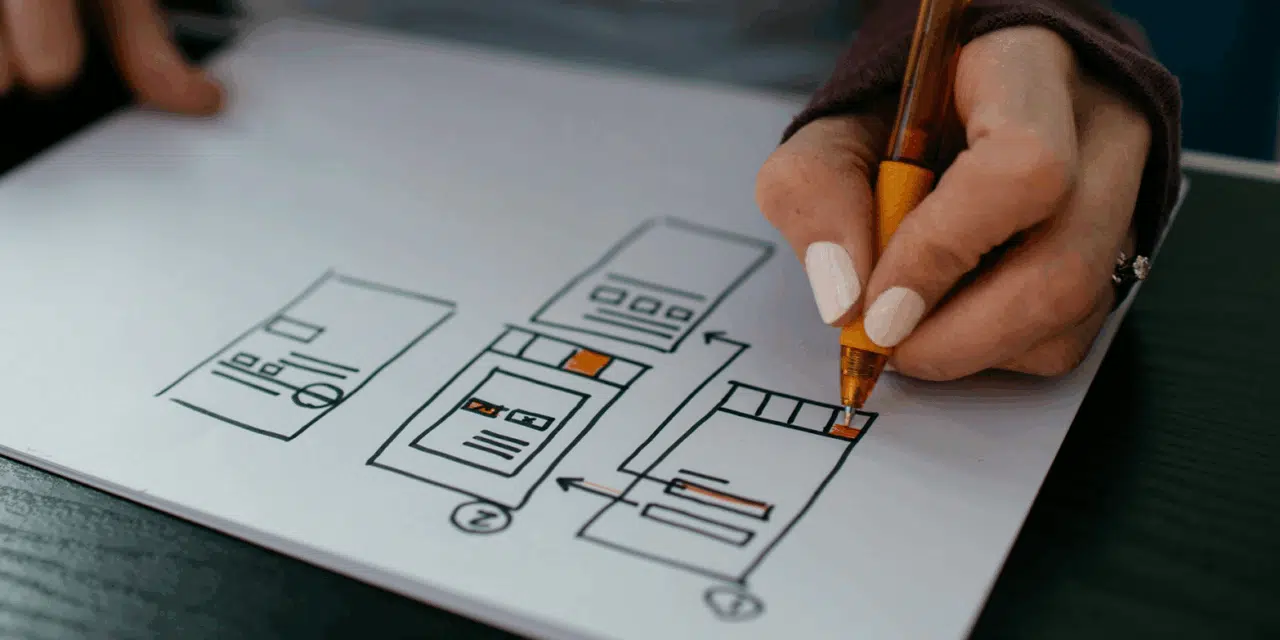
Flow is the state where a user moves through a website without friction, confusion, or hesitation.
When a website works well, users don’t notice the design intentionally. They simply move from one task to the next. Their eyes know where to go. Their next step makes sense. Nothing feels like effort. That is flow.
Yet modern web design often interrupts flow. Sometimes in the name of aesthetics. Sometimes because a brand wants to “stand out.” Sometimes simply because too many decision-makers add too many layered preferences on top of the original structure.
Flow in UX is about control, clarity, and rhythm. It is where creativity has purpose and functionality has direction.
Table of Contents
The Foundation of Flow
Flow begins with understanding the user’s goal and removing anything that competes with that goal.
Every website exists to help someone do something:
- Learn
- Decide
- Buy
- Evaluate
- Contact
- Return later
The website either helps this process or gets in the way. Strong UX is not created by adding more features. It is created by removing anything that interrupts the task path.
Clear Hierarchy
Hierarchy determines what gets seen first, second, third. If everything looks important, nothing stands out. If nothing stands out, users stall. Stalling breaks flow.
Predictable Structure
Predictability is not the opposite of creativity. It is the backbone of usability. When users have to think about how to use something, flow stops.
Scannability
Most users skim first, evaluate second, and read last. Scannable content supports natural cognitive pacing.
Flow is not mysterious. It is intentional design that respects how the human brain processes information.
Creativity Without Interruption
Creativity strengthens UX when it guides attention rather than competing for it.
Design flourishes best when it has constraints. This is where many designers misinterpret freedom. Freedom without purpose turns into visual noise. Creativity with direction turns into familiarity, brand presence, and trust.
Color and Contrast
Color can energize a page or fracture it. Contrast makes content readable. WCAG contrast standards exist to protect users from strain and inaccessibility. When text blends into a background, flow collapses because users must work to read.
Typography
Type should support clarity, not perform. Flow increases when typography allows the eye to glide line to line. Flow breaks when typography attempts to impress.
Motion and Micro-interaction
Movement should support cues:
- Expand
- Reveal
- Confirm
- Guide
When motion distracts, delays, or adds novelty instead of function, it pulls users out of rhythm.
Creativity should not feel like “look at this.” It should feel like “this makes sense.”
The User’s Mental Model
Flow aligns the design with what the user already expects, not what the brand wishes they expected.
People bring learned patterns with them. These patterns are formed across thousands of digital interactions:
- Buttons look like buttons.
- Navigation menus behave consistently.
- Links are identifiable as links.
- Forms give feedback immediately.
Breaking these patterns does not show creativity. It forces cognitive recalibration. That recalibration is friction. Friction breaks flow.
The greatest UX work feels familiar. Not generic. Familiar. Recognizable enough to feel intuitive, distinct enough to feel intentional.
The Role of Accessibility
Accessibility is not an optional feature of UX; it is the baseline that determines whether a website is usable at all.
Flow requires inclusivity. If someone cannot:
- Read the text
- Navigate with a keyboard
- Understand form instructions
- Access content with assistive tools
Then flow is impossible.
Accessibility standards like WCAG are not barriers to creativity. They are structure. They support longevity. Websites built with accessibility as a foundation remain relevant longer and require fewer revisions.
Accessible sites convert better, retain users longer, and earn trust faster. That is not theory. It is observable.
Establishing Flow in UX Strategy
Flow comes from designing the experience first and the visuals second.
This order matters:
- Identify the user’s primary path.
- Create the simplest route to complete that path.
- Build visual communication that supports the route.
The opposite order—design first, purpose second—results in visually interesting sites that frustrate users.
Designing With Intent
Ask:
- What is the user here to do?
- What must be visible immediately?
- What can happen later down the page?
- Where does the eye go naturally?
Flow emerges when these questions are answered consistently across every page.
Testing for Flow
Real flow testing is observational:
- Watch where users hesitate.
- Watch where they scroll back up.
- Watch where they ask questions.
Those moments identify the breaks. Fix those, and the experience becomes smooth.
Creativity Thrives After Structure Exists
Creativity has more impact when it is layered on top of clarity, not used in place of it.
When a website has:
- Clear hierarchy
- Accessible contrast
- Predictable navigation
- Meaningful pacing
- Consistent interaction patterns
Then creativity enhances the experience, rather than competing with it.
Strong UX is not creativity versus functionality. It is creativity placed in service of functionality.
Creativity that follows structure makes websites feel effortless, refined, and cohesive. Creativity without structure feels impressive at first glance and frustrating in use.
Flow happens when the user and the interface move at the same pace.
Flow is not a design trend. It is a measure of respect for the user’s time, attention, and cognitive load.
Design that supports flow feels calm. It feels direct. It feels confident. It stays out of the user’s way while guiding them forward.
When creativity strengthens clarity, flow forms naturally. When creativity competes for attention, flow fractures.
A website with flow does not have to announce itself. It simply works. And when something simply works, people stay, return, and act.
Flow is quiet, consistent, and intentional design. That is where the strongest digital experiences live.