
Italy is not a unified power system anchored by a single dominant capital.
It operates as a collection of historically independent regions whose political authority, economic strength, and cultural influence developed separately and were never fully consolidated after unification.
Modern Italy remains regional by instinct, structure, and daily reality.
Italian influence flows horizontally rather than vertically.
Different regions project power through different channels, often without coordination or hierarchy.
Table of Contents
Rome: Political Authority Without Economic Control
Rome functions as Italy’s political and administrative capital, but not its economic or cultural command center.
Rome holds national government, ministries, and diplomatic institutions.
Its authority is legal and procedural rather than productive. Unlike Paris or London, Rome does not dominate finance, industry, or media.
Historically shaped by empire and later by the Catholic Church, Rome developed as a seat of authority rather than commerce.
That legacy persists. Government exists here, but economic gravity does not.
Rome’s influence centers on:
- National legislation and administration
- Diplomacy and international representation
- Historical and symbolic legitimacy
Rome governs Italy, but it does not organize it.
Milan: Economic Power and Modern Italy
Milan functions as Italy’s true economic capital and its most globally aligned city.
Milan dominates finance, corporate leadership, fashion, media, and industrial coordination.
It is the closest Italy comes to a centralized economic engine.
Milan’s role includes:
- Financial markets and banking
- Fashion and luxury brand leadership
- Corporate headquarters and management
- Media and advertising
- Design and industrial organization
Culturally, Milan is pragmatic, international, and future-facing. It sets Italy’s tempo where Rome preserves its continuity.
The tension between the two cities reflects Italy’s split between administration and production.
Northern Italy: Industrial and Export Authority
Northern Italy anchors manufacturing, trade, and European integration.
Regions such as Lombardy, Veneto, Emilia-Romagna, and Piedmont form one of Europe’s most productive industrial zones.
These areas emphasize family-owned firms, export specialization, and applied engineering.
Northern influence rests on:
- Manufacturing and precision industry
- Global supply chains
- Food, automotive, and machinery exports
- Integration with European markets
Culturally, the north values efficiency, punctuality, and institutional reliability more than ceremonial tradition.
Its power is material rather than symbolic.
Turin: Industrial Legacy and Technological Depth
Turin represents Italy’s industrial backbone and technical heritage.
Turin historically anchored automotive production and heavy industry.
While its global profile has faded, Turin remains influential through engineering, research, and advanced manufacturing.
Its role includes:
- Technical expertise
- Industrial coordination
- Engineering education
- Design and applied innovation
Turin exemplifies Italy’s quieter, systems-oriented influence.
Florence: Cultural Authority and Historical Capital
Florence represents Italy’s intellectual, artistic, and historical gravitational center.
Florence does not dominate modern economics, but it remains foundational to global concepts of art, proportion, and human-scale urbanism.
Florence’s influence lies in:
- Art history and preservation
- Cultural education
- Aesthetic standards
- Tourism as cultural transmission
Its authority is symbolic rather than operational, but it continues to shape how Italy is perceived globally.
Venice: Legacy Power and Global Memory
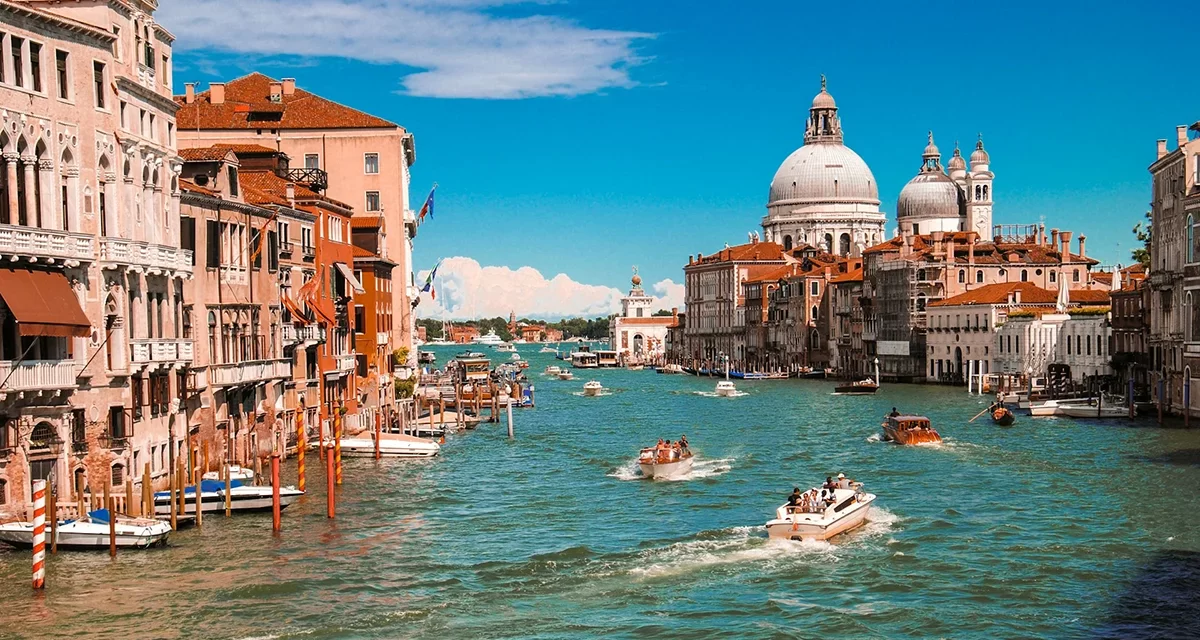
Venice projects influence through historical memory rather than modern governance.
Venice was once a maritime empire and trading power.
Today, its role is cultural and symbolic, shaping global ideas about commerce, architecture, and civic design.
Venice’s influence persists through:
- Historical reference
- Architectural legacy
- Tourism and global imagination
Venice no longer runs systems, but it anchors narratives.
Southern Italy: Cultural Depth and Structural Disparity
Southern Italy holds cultural continuity without equivalent economic leverage.
Regions south of Rome maintain strong local identities, traditions, and social structures shaped by agrarian history, external rule, and limited industrialization.
Southern Italy is centered on:
- Food culture and culinary standards
- Family-centered social structures
- Music, dialects, and regional identity
Economic power remains weaker here, reinforcing long-standing north–south imbalance that continues to shape Italian politics.
Naples: Cultural Force Outside Institutional Power
Naples exerts major cultural influence without corresponding institutional authority.
Naples contributes music, cuisine, language, and popular culture that travel globally.
At the same time, administrative weakness and economic instability limit structural control.
Naples shapes Italy’s emotional and cultural identity while remaining outside its power hierarchy.
How Italian Power Actually Works
Italy does not centralize power effectively, and it does not fully distribute it either.
Authority, money, culture, and legitimacy sit in different places.
- Rome governs
- Milan organizes capital
- The north produces
- Tuscany defines culture
- The south preserves identity
This fragmentation limits geopolitical coordination but sustains cultural influence at scale.
Italy’s Influence Model
Italy shapes the world through:
- Design and aesthetics
- Food and lifestyle norms
- Craft and material culture
- Historical legitimacy
- Regional specialization
Its influence spreads through imitation rather than policy adoption.
Italy Structure Q&A
Why doesn’t Rome dominate Italy like Paris dominates France?
Italy unified late and preserved strong regional autonomy, preventing administrative centralization.
Is Milan more powerful than Rome?
Economically and culturally in modern terms, yes. Politically, no.
Why is northern Italy so much wealthier than the south?
Earlier industrialization, trade integration, and institutional continuity concentrated economic growth in the north.
Does Italy’s fragmentation weaken it internationally?
Structurally, yes. Culturally, no.
What keeps Italy globally influential despite political instability?
Design, food, art, and historical authority embedded in everyday global life.