
People speak about running a cash register like it is some hidden skill you either “get” or you don’t.
As though there is a mystery to it. As though one wrong move sends alarms ringing and managers running.
That belief causes unnecessary stress. It stops people from applying for jobs. It keeps adults doubting themselves. It creates fear during times when steady work matters most—especially during a recession.
The truth is simpler: running a till is a basic system built on logic, repetition, and counting.
Once the system is explained plainly, it becomes obvious. Almost boring. And very manageable.
This post breaks it down in plain language, step by step, so anyone can understand it—without retail jargon, pressure, or intimidation.
Table of Contents
Why Cash Registers Feel More Intimidating Than They Are
Most adults already know how money works.
What people don’t know is how stores organize money during a transaction.
Registers feel complicated for three reasons:
- No one explains the “why,” only the “do this”
- Training is rushed
- Mistakes are treated like personal failures instead of learning moments
A register is not a test of intelligence. It’s a tool designed to move money in a predictable way. The system does not change based on who is using it.
Once you understand the structure, confidence follows.
What a Till Actually Is
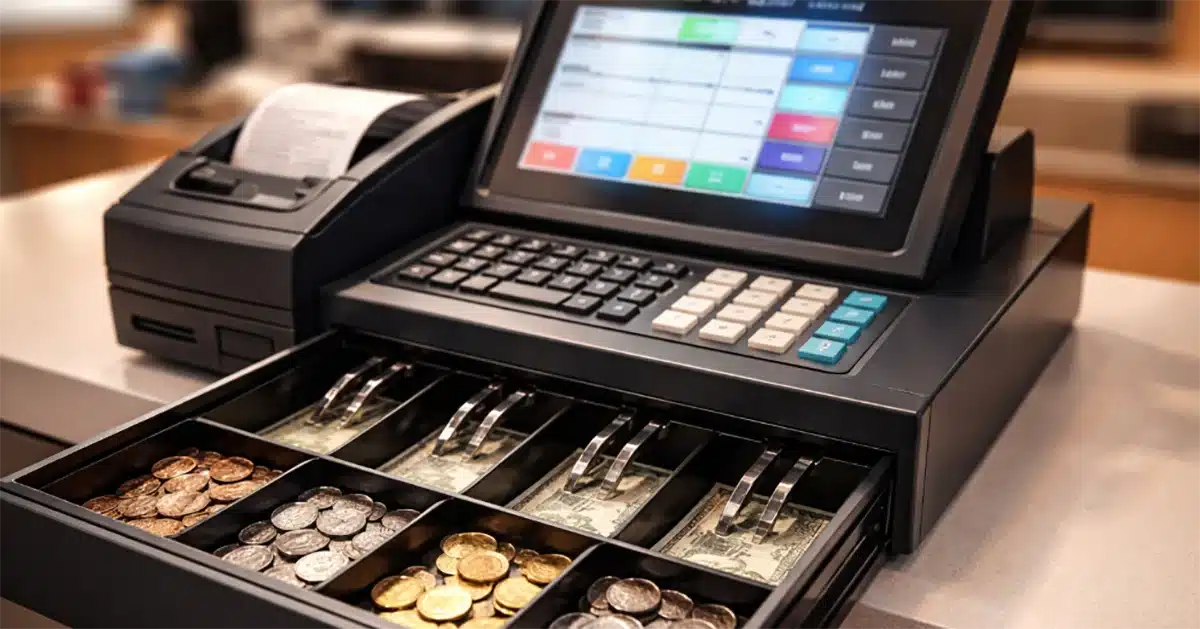
A till is simply a cash drawer with sections.
Each section exists for one purpose: organization.
From left to right, most tills are arranged from larger bills to smaller coins. The exact layout can vary, but the logic never does.
Bills:
- Large denominations on the left
- Smaller denominations toward the center
Coins:
- Larger value coins first
- Smaller coins last
This layout helps your hands learn where things are without thinking.
Over time, your muscle memory does the work.
The Only Rule That Matters: Count Back Change
The golden rule of running a till is counting change back to the customer.
This is where most anxiety comes from—and where most mistakes are prevented.
You do not guess.
You do not rely on the screen alone.
You count from the purchase total up to the amount given.
That’s it.
How Counting Back Change Actually Works
Let’s say:
- Total: $12.37
- Customer gives you: $20.00
You start at $12.37 and count up:
- Add coins to reach the next dollar
- +1¢ → $12.38
- +1¢ → $12.39
- +1¢ → $12.40
- +10¢ → $12.50
- +50¢ → $13.00
- Then bills:
- +$1 → $14.00
- +$1 → $15.00
- +$5 → $20.00
Each step is spoken or thought through in order.
This method:
- Prevents short-changing
- Prevents over-giving
- Builds confidence fast
If the drawer is organized correctly, your hands naturally move from smaller to larger amounts.
Why Registers Are Built This Way
Registers are designed to protect both the worker and the business.
They assume humans make mistakes—and they plan for that.
- The drawer opens only when needed
- The screen tracks totals automatically
- The layout reduces mental math
- The counting method catches errors early
You are not expected to “do math fast.”
You are expected to follow the system.
Mistakes Happen—and They’re Normal
Everyone makes register mistakes at first. Everyone.
Common beginner mistakes:
- Forgetting to count change out loud
- Reaching for the wrong bill slot
- Feeling rushed by a line
None of these mean you “can’t do it.”
Speed comes last. Accuracy comes first.
Managers would rather have a slow, accurate cashier than a fast, careless one.
Why This Matters More During a Recession
During economic downturns, people take jobs they might not have considered before.
Retail, food service, and front-line roles become lifelines.
Fear of “messing up the register” should never stop someone from earning a paycheck.
Running a till is a learnable skill, not a personality trait.
It does not require youth.
It does not require retail experience.
It does not require confidence on day one.
It requires practice—and permission to learn.
The Confidence Shift That Changes Everything
Once people realize:
- The system is fixed
- The math is basic
- The structure does the heavy lifting
The fear fades.
You stop thinking, “What if I mess up?”
You start thinking, “I know the process.”
That shift matters. Especially when stability matters.
Running a Cash Register Q&A
Is running a till hard?
No. It feels hard only when the system is not explained.
Once you understand the layout and the counting method, it becomes routine.
Do I need to be good at math?
No. You need to count step by step.
The register handles the math. You handle the order.
What if I give the wrong change?
It happens.
Most systems track discrepancies, and managers correct them. One mistake does not define your ability.
Why do people say registers are stressful?
Because stress comes from pressure, not complexity.
Rushed training and fear of judgment create anxiety—not the task itself.
Can an adult with no retail experience learn this quickly?
Yes.
Most people feel comfortable within a few shifts once they understand counting back change.
Does every register work the same way?
Layouts may differ slightly, but the logic is universal: organized bills, organized coins, count up to the amount given.
What’s the fastest way to get confident?
Slow down.
Count every time. Confidence grows from accuracy, not speed.
The Bottom Line
Anyone can run a till.
Not because it’s trivial—but because it’s structured.
Once the mystery is removed, what’s left is a simple process built to support the person using it. During uncertain times, that matters. People deserve clarity, not intimidation.
A cash register is not a gatekeeper.
It’s just a drawer, a screen, and a method.