
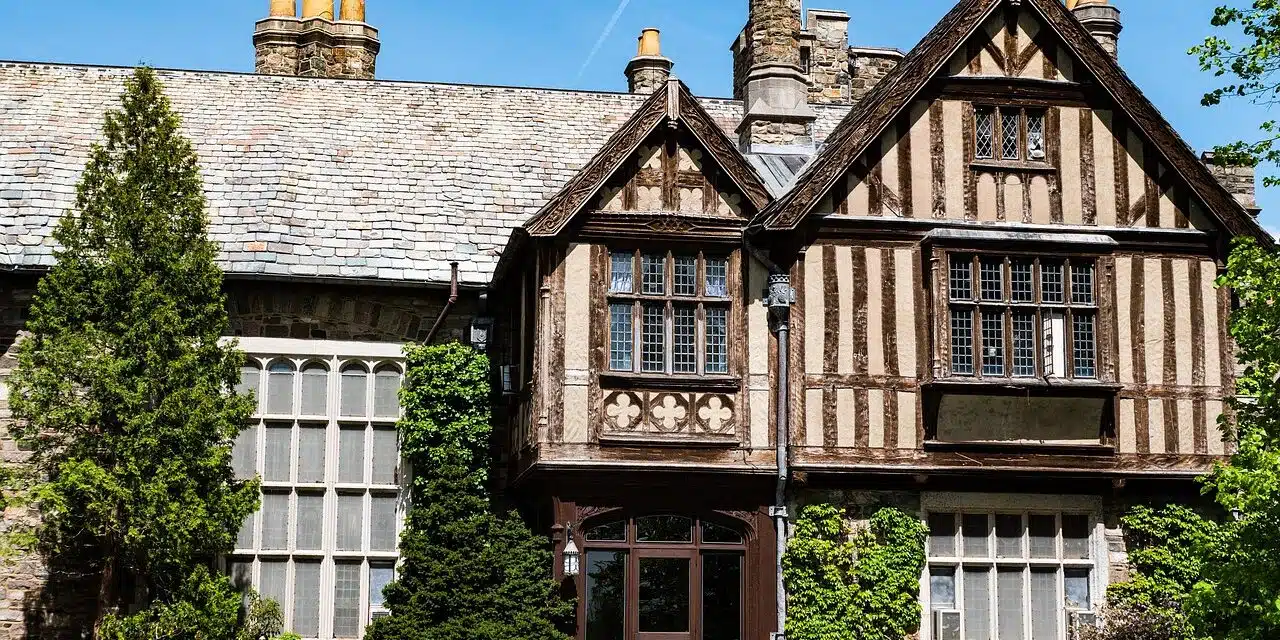
Bergen County carries a long, layered history that continues to shape daily life, local culture, and the experience of visiting the area.
Located in the northeastern corner of New Jersey, directly across the Hudson River from Manhattan, Bergen County is one of the oldest and most historically significant counties in the state.
While many people associate it with suburban neighborhoods, shopping corridors, and highways, the county has roots that reach back centuries before the United States existed. Its identity today reflects a balance of local heritage, modern convenience, and proximity to New York City.
Table of Contents
Early History and Formation
Bergen County began as a region shaped by Lenape communities long before European settlement.
Before the arrival of Dutch settlers in the 17th century, the Lenape lived across the land that is now Bergen County. They farmed, hunted, and traveled along routes that would later become major roads. Their influence remains visible in local place names, preserved trails, and archaeological sites.
Dutch colonists arrived in the 1600s, establishing trading settlements along the Hudson. The area became part of New Netherland before eventually shifting to British control. In 1683, Bergen County was officially formed as one of New Jersey’s four original counties.
Its position near the Hudson River made it strategically important during the American Revolution, with fortifications, troop routes, and encampments spread throughout the region.
Revolutionary Significance
During the Revolution, Bergen County saw both British and Continental forces regularly pass through. General George Washington crossed what is now Fort Lee during critical retreats. Towns like Englewood, Hackensack, and New Bridge Landing preserve sites where military decisions were made.
This history is not abstract here. Many of the oldest homes, stone churches, and road networks date back to this era. You can stand in places where Washington’s troops marched and see the very structures they would have recognized.
Industrial Growth and Community Expansion
As the 19th and 20th centuries unfolded, Bergen County transitioned from farmland to a network of commuter communities.
The county’s growth accelerated with the arrival of railroads in the late 1800s.
Train lines connected smaller towns to New York City, making Bergen County appealing to workers who wanted quiet neighborhoods while maintaining access to the economic center across the river.
Suburban growth continued after World War II when new housing, schools, and commercial centers expanded to meet population demand. But unlike areas that grew quickly without planning, many Bergen communities preserved local character.
Small downtowns, pocket neighborhoods, and family-run businesses remain defining features.
Today, Bergen County is known for:
- Tree-lined residential streets
- Independent shops and restaurants
- Strong public schools
- Access to both nature and city resources
It is suburban, but not isolated.
Life in Bergen County Today
Living in Bergen County means easy access to New York City while maintaining a quieter, neighborhood-focused environment.
Many residents work in Manhattan, Jersey City, or the Meadowlands business corridors. But daily life tends to center on local schools, community centers, parks, and small-business main streets.
The Character of Local Towns
Bergen County is not one homogenous area.
Each town has its own identity:
- Ridgewood offers walkable streets, cafés, and a lively downtown.
- Hackensack serves as a major commercial and medical hub.
- Englewood blends historic neighborhoods with theaters and dining.
- Fort Lee connects directly to the George Washington Bridge, offering dense, urban-adjacent living.
- Mahwah and Ramsey offer more space, nature, and access to the Ramapo Mountains.
Residents often identify more strongly with their individual town than with the county as a whole.
Community Culture
Bergen County prioritizes:
- Public education
- Recreational activities
- Local sports
- Seasonal festivals
- Preservation of local history
It is common to see local parades, farmers’ markets, summer concerts, and youth sports filling parks on weekends.
Things to Do in Bergen County
Bergen County offers museums, parks, dining districts, historic sites, and access to nature without having to travel far.
This is part of what makes it appealing to both visitors and locals who explore beyond their daily routine.
Historic Sites Worth Visiting
- Historic New Bridge Landing (River Edge): A Revolutionary War site with original stone houses and guided tours.
- Fort Lee Historic Park: Overlooks the Hudson with trails and reenactments reflecting Revolutionary-era military history.
- Old Stone House Museums: Scattered throughout the county, many of which are preserved by local historical societies.
Parks and Nature Spaces
- Palisades Interstate Park: Runs along the Hudson cliffs with dramatic viewpoints, wooded trails, and bike paths.
- Ramapo Valley County Reservation (Mahwah): Popular for hiking, lakes, and mountain overlooks.
- Saddle River County Park: A long, connected path system ideal for biking, jogging, and walking.
Bergen County has more forests, trail access, and scenic waterways than many people realize, especially given its proximity to New York City.
Arts and Cultural Destinations
- Bergen Performing Arts Center (Englewood): Hosts concerts, theater, and community programming.
- Belskie Museum of Art & Science (Closter): Small but notable for rotating exhibits.
- Local galleries and town arts programs: Common in Ridgewood, Tenafly, Wyckoff, and others.
Dining and Local Food
Dining spans classic neighborhood delis, Korean barbecue in Fort Lee and Palisades Park, Italian bakeries in nearly every town, and family-owned restaurants that have been local fixtures for decades.
Food here reflects history: European immigrant roots blended with diverse international communities over the past century.
Why Bergen County Matters
Bergen County represents a meeting point of the past and the present, where deep history coexists with everyday life.
It is close to New York City, but not defined by it. The county stands on its own as a place where families grow, businesses develop, and communities sustain themselves over generations. The historical depth adds texture to what could otherwise be seen as a standard suburban region. Instead, it becomes a place with identity and continuity.
For visitors, Bergen offers an alternative to Manhattan’s pace without traveling far. For residents, it offers familiarity, community, and long-term roots.
Final Thought
Bergen County’s story continues, shaped by the people who live, work, visit, and care for it.
Its history informs its present, and its present remains connected to the past in visible, everyday ways. Whether walking along the Palisades, exploring old Revolutionary sites, or simply taking part in a weekly routine, the county’s character comes through quietly and consistently.
Bergen County is the kind of place where life can be steady, rooted, and meaningful. And that is its distinction.