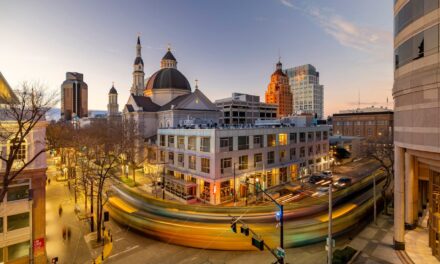

Essex County has played a central role in New Jersey’s political, industrial, cultural, and transportation development since the colonial period.
Located in northeastern New Jersey, Essex County sits directly west of Manhattan and includes a wide range of municipalities—from the dense urban environment of Newark to the suburban communities of Montclair, Livingston, and Millburn, and the preserved green spaces of the Watchung Mountains.
The county’s identity reflects its long history of commerce, manufacturing, civic leadership, and transit connectivity.
Table of Contents
Early Settlement and Colonial Development
The land that is now Essex County was originally home to Lenape communities before Dutch and later English settlers arrived in the 1600s.
The Lenape lived throughout the region along the Passaic River, the Newark Bay coastline, and the upland ridges. Dutch settlers established trading posts and farmland, but English influence grew quickly after the late 1600s. Newark, founded in 1666 by Puritans from the New Haven Colony, became one of the earliest organized towns in New Jersey.
Essex County was established in 1683 and became one of New Jersey’s first counties. Newark developed into a local government and commercial center early, positioning the county as a strategic point of administration and trade.
Role in the American Revolution
The county’s roads and ridges were used for troop movement and signal points. Washington’s forces passed through the region multiple times. Several preserved sites, such as the Washington’s Headquarters marker in Newark and the Revolutionary-era stone houses in Montclair and Caldwell, remain part of local historical networks.
Industrial Growth, Transportation, and Immigration
During the 19th and early 20th centuries, Essex County became a major industrial and transportation hub.
Newark grew into a manufacturing center known for leather goods, jewelry, beer brewing, pharmaceuticals, and shipping.
Factories clustered near rail lines, the Morris Canal, and Newark’s port facilities along the Passaic River. Nearby towns including Orange, West Orange, and Bloomfield developed streetcar suburbs that supported a growing workforce.
Thomas Edison in West Orange
West Orange became home to Thomas Edison’s laboratory and industrial complex, now the Thomas Edison National Historical Park. Many of Edison’s experiments and inventions were carried out here, including work on lighting, motion pictures, and sound recording.
Immigration Waves
The county saw successive waves of immigrants:
- Irish and German workers in the 1800s
- Italian, Polish, and Jewish communities in the late 1800s–early 1900s
- Portuguese and Brazilian communities particularly in Newark’s Ironbound
- Caribbean, West African, South American, and East Asian communities in the late 20th century onward
These communities shaped neighborhood identities, food, business districts, and civic organizations.
Municipal Diversity Across the County
Essex County contains a varied municipal landscape, with distinct roles and local identities.
Newark
- Largest city in the county
- Major transportation and business center
- Home to Newark Liberty International Airport, Penn Station, Port Newark, NJIT, Rutgers-Newark, Seton Hall Law, and performing arts venues such as NJPAC and the Newark Museum of Art
Montclair
- Known for arts, dining, walkable downtowns, and Montclair State University
- Strong cultural institutions including the Montclair Art Museum and multiple independent theaters
West Orange, South Orange, Maplewood
- Residential communities with tree-lined neighborhoods
- Commuter access to NYC via NJ Transit rail and bus lines
Livingston, Millburn, Short Hills
- Suburban communities, strong public schools, retail access
- Short Hills contains a major shopping destination, The Mall at Short Hills
Bloomfield, Belleville, Nutley
- Mixed residential and business corridors
- Strong commuter access and established local community life
The county’s towns vary widely in density, architecture, and community structure, which contributes to the county’s complexity and variety.
Parks, Natural Landscape, and Historic Sites
Essex County maintains significant park and conservation areas, many designed by or influenced by the Olmsted firm.
Branch Brook Park (Newark/Belleville)
- Known for its cherry blossom trees, the largest collection in the United States
- Designed with Olmsted influence, featuring pathways, lakes, and spring festivals
South Mountain Reservation (West Orange/Millburn/Maplewood)
- Forested reservation with hiking trails, overlooks, waterfalls, and the Turtle Back Zoo
Eagle Rock Reservation (West Orange)
- Ridge overlook with direct views of Manhattan and a memorial to September 11
Thomas Edison National Historical Park (West Orange)
- Preserved laboratory and museum documenting Edison’s work
These sites offer outdoor access in a region often associated primarily with suburban and urban infrastructure.
Arts, Education, and Cultural Institutions
Essex County maintains a strong arts and academic presence that supports regional identity.
Major institutions include:
- New Jersey Performing Arts Center (NJPAC)
- Newark Museum of Art
- Montclair Art Museum
- Paper Mill Playhouse (Millburn)
- Montclair Film Festival
Universities shape local neighborhoods, housing, and cultural programming:
- Montclair State University
- Rutgers University–Newark
- New Jersey Institute of Technology
- Seton Hall University School of Law
These institutions contribute to the county’s ongoing cultural development.
Transportation and Regional Role
Essex County is one of the key transportation gateways for the Northeast Corridor.
It connects New Jersey to New York City via:
- PATH trains
- NJ Transit commuter rail
- Light rail
- Major highways (Garden State Parkway, I-280, Route 21, and the New Jersey Turnpike)
Newark Liberty International Airport and Port Newark function as international entry points, reinforcing Essex County’s ongoing role in commerce and travel.
Visiting Essex County: What to See
Visitors can explore industrial history, museums, dining districts, parks, and cultural venues throughout the county.
Notable visit points include:
- Paterson Great Falls and downtown Paterson history (near the county border, historically connected industries)
- Branch Brook Park cherry blossoms in spring
- Montclair dining, galleries, and independent shops
- South Mountain Reservation hiking and Turtle Back Zoo
- Newark’s Ironbound neighborhood for Portuguese and Brazilian dining
- Thomas Edison National Historical Park tours
These destinations give visitors an accurate sense of the county’s history and present-day character.
Final Thought
Essex County’s history is rooted in early colonial settlement, shaped by industrial growth, and carried forward today through cultural institutions, education, and diverse local communities.
Its towns are not interchangeable; each offers its own identity and purpose. The county remains a central part of New Jersey’s economic and cultural landscape, supported by infrastructure, universities, and ongoing development across its neighborhoods and civic spaces.