Mercer County’s identity has been shaped by its role as a political center, transportation crossroads, and educational hub with national significance.
Located near the midpoint between New York City and Philadelphia, Mercer County sits at a strategic juncture where rivers, roads, and later railroads converged.
Its central city, Trenton, served as a Revolutionary War battleground, an early U.S. industrial center, and ultimately the capital of New Jersey. At the same time, Princeton developed into one of the country’s most influential academic centers.
Together, these forces established Mercer County as a region where governance, scholarship, and infrastructure intersect.
Table of Contents
Indigenous Presence and Early Settlement
Before European arrival, the Lenape people lived across the river valleys and upland fields of present-day Mercer County.
They used the Delaware River and its tributaries for fishing and seasonal travel and established pathways that would later influence colonial road networks.
Early European Settlement
Dutch, Swedish, and English settlers began arriving in the 1600s.
They established farms along the Delaware River floodplains and constructed mills powered by streams feeding the river.
Formation of the County
Mercer County was officially formed in 1838, named after General Hugh Mercer, a Continental Army officer who died at the Battle of Princeton. The county seat was designated in Trenton, which already held strategic and commercial importance.
Revolutionary War Significance
Mercer County was the site of decisive Revolutionary War actions that shifted the conflict’s momentum.
The Battle of Trenton (1776) and the Battle of Princeton (1777) were turning points that demonstrated the Continental Army’s resilience and tactical capability.
Washington’s Crossing and the Battle of Trenton
George Washington’s crossing of the icy Delaware River on Christmas night in 1776 resulted in a surprise victory over Hessian troops stationed in Trenton. The event is widely recognized as a critical morale shift.
Princeton Battlefield
At the Battle of Princeton, Continental forces defeated British troops in open field engagements. The Princeton Battlefield State Park and Clarke House preserve this history.
These sites tie Mercer County directly into the national narrative of independence. Familiar imagery from school textbooks remains physically present in the landscape today.
Education and Intellectual Influence
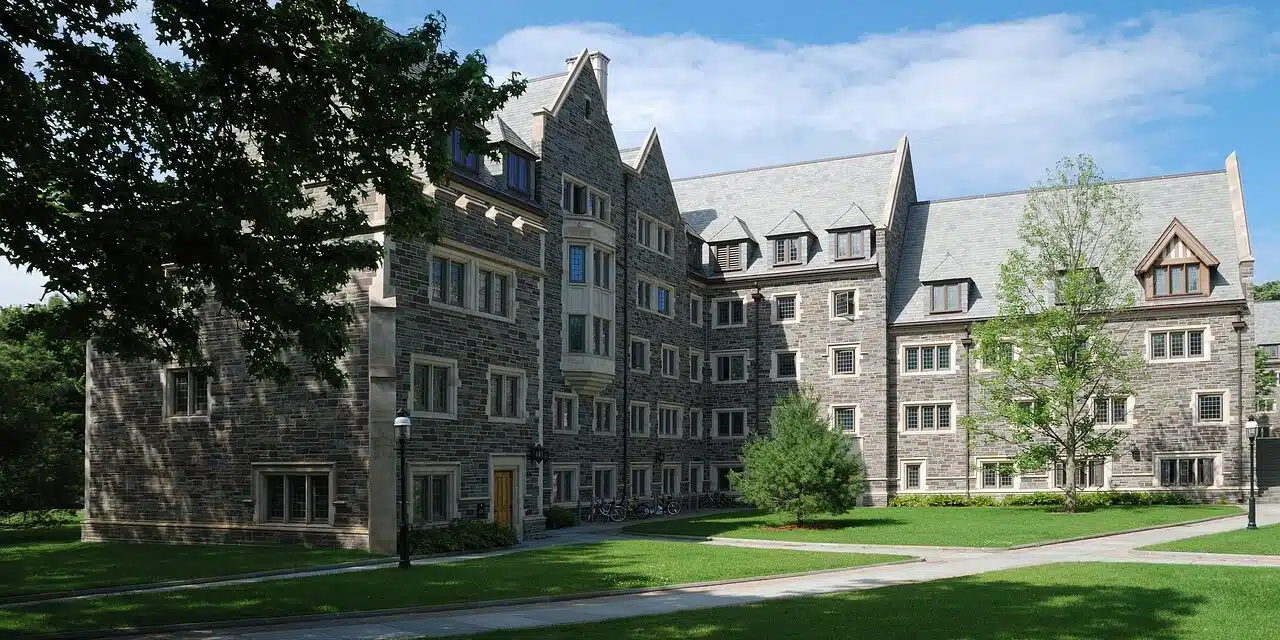
Princeton University has played a central role in shaping Mercer County’s cultural and academic identity.
Founded in 1746, the university moved to Princeton in 1756, where it became a cornerstone of the county’s intellectual life.
Academic Growth and Influence
Princeton developed into a globally recognized center of:
- Research
- Public policy discussion
- Theological study
- Arts and sciences
Institute for Advanced Study
In the 20th century, the Institute for Advanced Study in Princeton became home to renowned thinkers, including Albert Einstein. The presence of such institutions forged a lasting academic presence.
Civic and Cultural Impact
The academic environment influences local institutions, public libraries, cultural organizations, and research partnerships throughout the surrounding municipalities.
Industrial Development and Trenton’s Manufacturing Legacy
Trenton emerged as an industrial center during the 19th and early 20th centuries, known particularly for steel, rubber, ceramics, and wire rope production.
The city’s river access and rail connectivity supported factories that supplied products nationwide.
“Trenton Makes, The World Takes”
The iconic slogan, still displayed on the Lower Trenton Bridge, reflects the city’s historical manufacturing role. Trenton’s factories produced:
- Steel cables
- Porcelain and ceramics
- Rubber goods
- Machinery and tools
Industrial Neighborhoods and Workforce
Factory districts shaped Trenton’s neighborhoods, drawing workers from multiple migration waves, including European immigrants and later Southern Black communities participating in the Great Migration.
Industrial change in the late 20th century reduced factory employment, but the city’s governmental and civic institutions remained.
Government and Civic Administration
As the capital of New Jersey, Trenton houses state government agencies, legislative offices, and administrative services.
Government functions anchor a significant portion of the local economy and influence daily activity in and around the city.
Public Workforce
Thousands of state workers commute to Trenton, supporting local businesses and maintaining downtown economic structure.
Legal and Civic Institutions
Trenton’s location also centralizes:
- State courts
- Cultural nonprofits
- Public policy organizations
- Regional administrative coordination
This reinforces Mercer County’s position as a public decision-making center.
Municipal and Regional Identity
Mercer County’s municipalities vary significantly in architecture, land use, and community culture.
Trenton
Capital city with historic civic structures, diverse neighborhoods, and government-centered economy.
Princeton
University presence, research culture, and walkable town center with historic districts.
Hamilton and Lawrence
Residential communities with strong parks, schools, and retail corridors.
Ewing
Anchored by The College of New Jersey (TCNJ), suburban neighborhoods, and county airport access.
Hopewell Valley
Rural roads, preserved farmland, and small villages blend history with modern residential life.
Parks, Trails, and Natural Areas
Mercer County contains rivers, forests, and historic landscapes that support recreation and conservation.
Key outdoor spaces:
- Mercer County Park with trails, lake access, and athletic facilities
- Delaware & Raritan Canal State Park for biking, running, and kayaking along canal towpaths
- Princeton Battlefield State Park for open landscape and historical interpretation
- Washington Crossing State Park marking the Continental Army’s route
The county’s outdoor network ties directly into its historical and civic identity.
Things to Do for Visitors and Residents
Mercer County offers historical tours, university museums, public parks, local cultural institutions, and diverse dining communities.
Recommended activities:
- Walk the Princeton University campus and visit the Princeton University Art Museum
- Tour Trenton State House and surrounding historic district
- Bike the Delaware & Raritan Canal Trail
- Visit Grounds for Sculpture in Hamilton for contemporary outdoor art installations
- Explore Palmer Square and Nassau Street for food, bookstores, and galleries
- Attend public lectures, performances, and community festivals tied to university and civic institutions
The county rewards curiosity—much of its value comes through exploration on foot and close observation.
Final Thought
Mercer County’s development reflects the intersection of history, governance, education, and transportation.
Its revolutionary landmarks, academic institutions, government centers, and preserved landscapes form a county where national history and daily civic life overlap. Mercer County remains a place where ideas, movement, and public purpose converge.