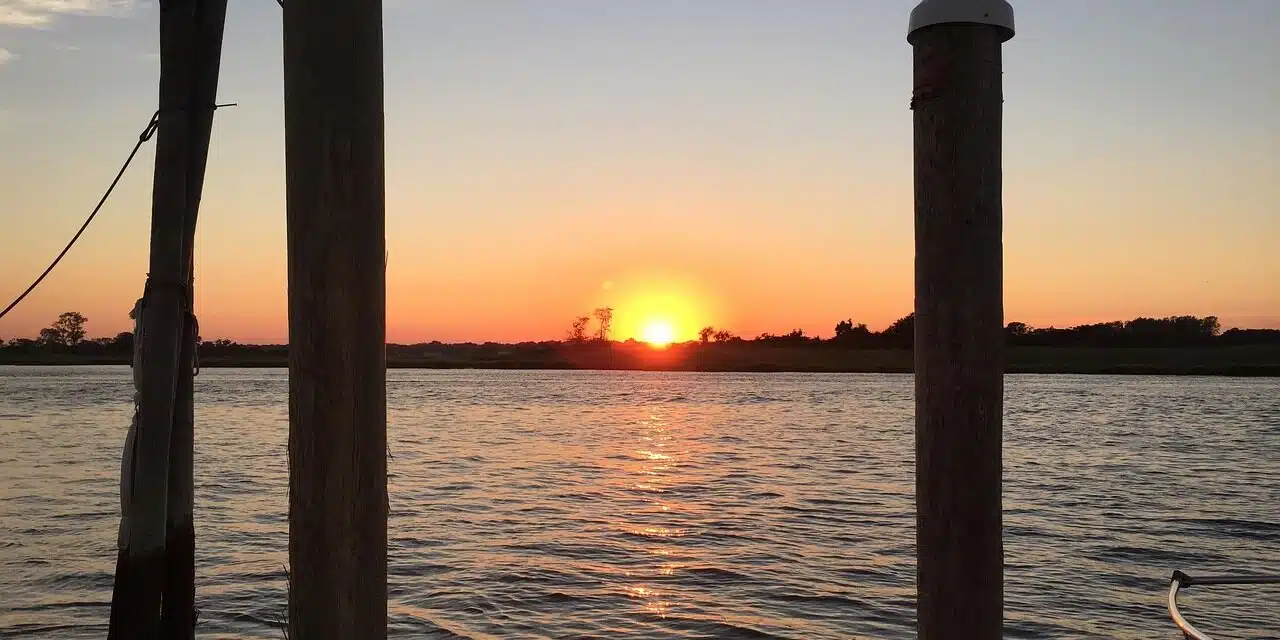
Monmouth County’s identity has been shaped by its coastline, agricultural tradition, transportation networks, and the longstanding connection between inland town centers and the Atlantic shore.
Located in central-eastern New Jersey, Monmouth County stretches from the Atlantic beaches to rolling inland farmland, river systems, and historic colonial towns.
It has long served as a transition region—far enough from New York and Philadelphia to maintain its own civic and cultural patterns, yet close enough to be shaped by their economic and transportation influence. Its blend of maritime heritage, military history, commuter suburbs, and preserved landscapes gives Monmouth a layered and visible timeline.
Table of Contents
Indigenous Presence and Early Settlement
The Lenape people occupied the region before European arrival, relying on river systems like the Shrewsbury, Navesink, and Manasquan for fishing, shellfish harvesting, and travel.
These waterways supported trade networks that extended inland, and their shape influenced later colonial settlement and town layouts.
Early European Settlement
Dutch, English, and Scots settlers began establishing communities in the 1660s.
The region’s open land, fertile soils, and river access supported farms, mills, and small port centers. Towns such as Shrewsbury and Middletown developed early and maintain visible historical structure today.
Geographic Advantage
Monmouth’s proximity to coastal inlets allowed for:
- Fishing and shellfishing economies
- Boat building and port activity
- Travel between coastal and inland towns
Waterways formed the basis for both economic development and early transportation links.
Revolutionary War and the Battle of Monmouth
One of the major engagements of the American Revolutionary War—The Battle of Monmouth—took place in the county in 1778.
The battle occurred near present-day Freehold, marking a pivotal moment in the Continental Army’s performance under General George Washington. Temperatures were extremely high, and the engagement lasted for hours.
Monmouth Battlefield State Park
The battlefield site is preserved as a large state park offering:
- Interpretive trails
- Reconstructed landscapes
- Historical exhibits
- Public reenactments and educational programming
Local Revolutionary Memory
Many town centers in Monmouth County include:
- Colonial-era cemeteries
- Meeting houses
- Military routes and encampment traces
This history is integrated into daily surroundings rather than isolated to a single monument.
Ports, Resorts, and Shore Development
The 19th century brought increased shoreline travel, recreational interest, and rail access, transforming Monmouth County into one of the earliest American coastal resort regions.
Railroads connected New York and North Jersey directly to beaches like Long Branch, Sea Bright, and Asbury Park.
Early Resort Era
Long Branch gained national attention as a summer destination, drawing U.S. presidents and notable public figures. Boardwalks, oceanfront hotels, and performance halls followed.
The Shrewsbury River and Coastal Town Culture
The Shrewsbury River shaped settlement patterns in:
- Rumson
- Sea Bright
- Fair Haven
- Red Bank
Bridges, marinas, and riverfront neighborhoods developed along its bends. Today, the river remains central to recreation, daily commuting patterns, and local identity. It is both scenic and structural to how people move and gather.
Industrial and Transportation Development
Monmouth County grew through rail, road, and later highway networks that tied inland towns to coastal and commuter regions.
By the mid-20th century, the Garden State Parkway and Route 35 corridor redefined commuting patterns and suburban expansion.
Regional Centers
- Red Bank evolved into a cultural and commercial hub, with theaters, galleries, and independent businesses.
- Freehold developed as an administrative and retail center with county government institutions.
- Asbury Park built a music and boardwalk culture that remains central to the county’s arts scene.
Military and Scientific Presence
Monmouth is also home to:
- Fort Monmouth (historic military and communications research center)
- Naval Weapons Station Earle, extending from Colts Neck to an offshore loading pier in Sandy Hook Bay
These sites shaped employment, land use, and regional infrastructure.
Agricultural Heritage and Open Space
Inland Monmouth County retains strong agricultural roots with preserved farmland, orchards, and equestrian culture.
While development increased through the 20th century, zoning measures and conservation initiatives supported boundary protection and land continuity.
Agricultural Patterns
- Horse farms and paddock landscapes in Colts Neck and Upper Freehold
- Orchards and market farms serving regional food networks
- Seasonal harvest activity tied to family-run farms
Parks and Protected Land
Monmouth County Park System manages extensive open space areas, including:
- Holmdel Park
- Turkey Swamp Park
- Thompson Park
- Sandy Hook’s Gateway National Recreation Area (federally managed but within the county’s coastal reach)
The preserved landscape is visible and actively used, not symbolic or inaccessible.
Modern Identity and Local Culture
Monmouth County today blends historic walkable town centers, commuter-linked suburbs, coastal recreation, and active community arts and events.
Its municipalities vary widely in character, but maintain a strong local identity.
Local Character Highlights
- Red Bank: Performing arts, dining, and riverfront walkability
- Asbury Park: Music venues, boardwalk culture, year-round creative scene
- Rumson & Fair Haven: Riverfront residential communities with marine access
- Freehold: County government and regional shopping anchor
- Middletown & Holmdel: Suburban communities with access to transit and parkland
Things to Do for Visitors and Residents
Monmouth County offers shoreline access, historic tours, riverfront dining, inland farms, and cultural venues.
Recommended experiences:
- Walk or bike Sandy Hook trails and beaches
- Explore the shops, music venues, and boardwalk of Asbury Park
- Visit Red Bank’s theaters, cafes, and independent retail
- Tour Monmouth Battlefield State Park
- Paddle or boat on the Shrewsbury River
- Visit farm markets and orchards in the county’s western townships
The appeal lies in variation—beach, river, town, farm—within short distance.
Final Thought
Monmouth County’s history is visible in its landscapes, waterfronts, institutions, and town centers that continue to function as active public spaces.
Its development reflects a balance among coastal recreation, historic continuity, academic and civic life, and the preservation of open land. The county’s character comes from the interplay of water, land, and community over centuries.