Teaneck Township is located in Bergen County in northeastern New Jersey and developed through a combination of early colonial agriculture, transportation access, suburban planning, and deliberate municipal policy.
Unlike many townships that expanded primarily through postwar sprawl, Teaneck’s growth was shaped by planning decisions made earlier in the twentieth century.
Its history reflects consistent land-use control, early suburban development, and an unusually active role for local government in guiding residential patterns and civic institutions.
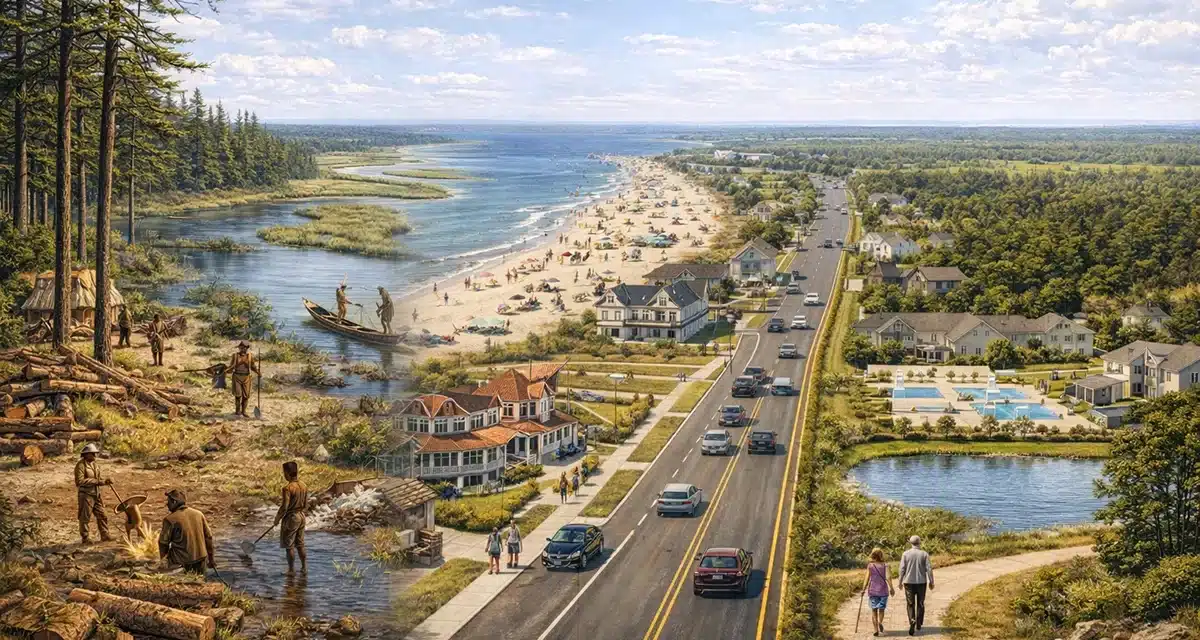
Teaneck’s modern form emerged through planning rather than accident.
Understanding Teaneck requires examining early settlement, suburban design, transportation access, and mid-century policy decisions that set it apart from surrounding municipalities.
Table of Contents
Indigenous Land Use and Early Geography
Before European settlement, the land that became Teaneck Township formed part of Lenape territory.
The area’s geography included wooded land, streams, and proximity to the Hackensack River basin.
These features supported seasonal movement rather than dense permanent settlement.
Lenape Presence
Lenape communities used the region for resource access within a broader regional network.
Land supported:
- Seasonal hunting and fishing
- Small-scale cultivation
- Movement between river and inland areas
European settlement in the seventeenth century displaced Indigenous populations through land acquisition, treaties, and force, ending Native control of the area.
Colonial Settlement and Agricultural Development
European settlement expanded into the area during the late seventeenth and eighteenth centuries.
Dutch and later English settlers established farms producing crops and livestock for local and regional markets.
Agriculture dominated land use for more than a century.
Farming Patterns
Land was divided into large tracts worked by family farms.
Common activity included:
- Crop cultivation
- Livestock raising
- Support of nearby market towns
Settlement remained dispersed. There was no centralized village or commercial core during the colonial period.
Formation of Teaneck Township
Teaneck Township was officially established in 1895.
Its creation reflected population growth and the desire for local governance separate from surrounding municipalities.
The township form allowed for centralized planning and control over zoning and infrastructure.
Early Municipal Organization
Initial governance focused on:
- Road maintenance
- Property assessment
- Local services
At incorporation, Teaneck remained largely agricultural, but pressures for suburban development were beginning to emerge.
Transportation and Early Suburban Appeal
Transportation access reshaped Teaneck’s development path.
Railroad and streetcar access connected the township to New York City, making it attractive as a residential suburb.
This access arrived before large-scale population growth, allowing planning to precede density.
Commuter Infrastructure
Transportation advantages included:
- Rail connections to regional employment centers
- Road access to nearby towns
- Early commuter-oriented development
Teaneck began transitioning from rural farmland to suburban community earlier than many nearby areas.
Early Twentieth-Century Suburban Planning
The early twentieth century marked a decisive shift.
Farmland was subdivided into residential neighborhoods designed with planning principles emphasizing detached homes, setbacks, and tree-lined streets.
Development favored orderly growth rather than speculative density.
Planned Residential Development
Key characteristics included:
- Single-family housing
- Curvilinear street patterns
- Separation of residential and commercial uses
Zoning and planning decisions reinforced a suburban character that persisted across decades.
Education, Institutions, and Civic Investment
As population increased, institutional development followed.
Schools, libraries, and municipal facilities expanded in response to residential growth.
Civic investment reinforced Teaneck’s role as a planned suburban community rather than an industrial town.
Civic Infrastructure
Expansion included:
- Public school construction
- Municipal services
- Community institutions
Education became a central focus of township planning and identity.
Mid-Twentieth-Century Policy and Integration
Teaneck played a notable role in mid-century civil rights history.
In the 1960s, the township voluntarily integrated its public schools through rezoning rather than court order.
This decision reflected local governance priorities and shaped Teaneck’s demographic trajectory.
School Integration
Key outcomes included:
- Redistricting for racial balance
- Increased diversity in public schools
- National attention to municipal decision-making
These policies influenced population patterns and long-term community structure.
Postwar Growth and Stability
After World War II, Teaneck continued growing as a suburban municipality.
Unlike rapidly expanding suburbs, growth remained controlled.
Zoning policies limited high-density development, preserving the township’s residential character.
Housing and Land Use
Development emphasized:
- Maintenance of single-family neighborhoods
- Limited commercial corridors
- Stable residential density
The township avoided large-scale industrial or commercial zoning.
Demographic Change and Community Structure
Late twentieth-century demographic shifts reflected broader regional trends.
Population diversity increased as Teaneck remained accessible to metropolitan employment while retaining suburban planning controls.
Community institutions expanded to support a changing population without altering land-use fundamentals.
Teaneck Township Today
Modern Teaneck reflects long-standing planning priorities.
Residential neighborhoods dominate land use. Commercial activity remains limited and localized.
Civic institutions continue to play a prominent role.
Key characteristics include:
- Planned suburban neighborhoods
- Strong municipal governance
- Established transportation access
- Limited industrial presence
Teaneck’s form reflects continuity rather than redevelopment.
Why the History Still Matters
Teaneck’s development explains its zoning, density, and institutional structure.
Early suburban planning, transportation timing, and municipal decision-making shaped outcomes that remain visible today.
Growth followed policy rather than speculation.
Those structural choices continue to define the township.
Teaneck Township Q&A
When was Teaneck Township established?
Teaneck Township was established in 1895.
Why did Teaneck suburbanize earlier than some nearby towns?
Transportation access and early planning encouraged residential development.
Did Teaneck have major industry?
No. The township emphasized residential zoning rather than industrial development.
What is Teaneck known for historically?
Planned suburban development and voluntary school integration in the mid-twentieth century.
What defines Teaneck today?
A stable suburban township shaped by planning, governance, and transportation access.