
Bathrooms look harmless. One sink. One outlet. A few daily devices. The problems start when convenience turns into routine without a system.
Most electrical issues in bathrooms don’t come from dramatic failures. They come from small habits repeated every day: unplugging chargers with damp hands, cords draped near water, heat tools competing for power, and outlets doing more work than they should.
This post lays out a simple, realistic approach to bathroom electrical safety that works in real homes, not just building codes.
Table of Contents
Why Bathrooms Deserve Extra Attention
Bathrooms combine electricity, water, humidity, and heat in a tight space.
That combination makes them different from every other room in the house.
Even when nothing goes wrong, bathrooms quietly stress outlets and cords more than bedrooms or living rooms.
The Hidden Risks
- Daily moisture from showers and sinks
- Damp hands touching plugs
- High-draw devices like hair dryers
- Limited outlet access forcing workarounds
None of these are dangerous on their own. Together, they add up.
The Real Problem: Daily Plugging and Unplugging
The highest-risk moment is not when a device is plugged in. It’s when you touch the plug.
Constantly unplugging toothbrushes, shavers, or cleaners next to the sink introduces risk through repetition.
Why Repeated Handling Is a Problem
- Hands may still be damp
- Plugs loosen outlets over time
- Cords shift closer to water
- Attention drops during routines
The safer move is reducing how often you interact with plugs in the first place.
Low-Draw Devices Should Stay Put
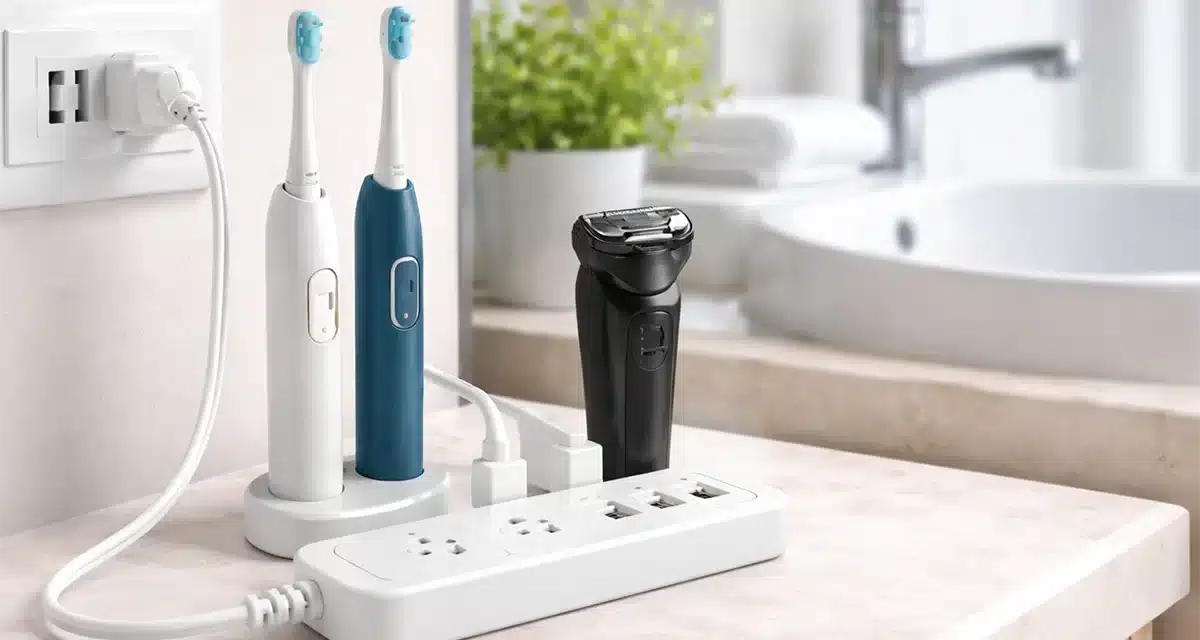
Electric toothbrushes and shaver chargers draw very little power.
They are designed to remain plugged in long-term.
Treating them like temporary devices creates unnecessary movement and risk.
Best Practice for Small Chargers
- Plug them in once
- Route cords neatly
- Keep them dry and stationary
- Stop touching them daily
This approach lowers risk and reduces outlet wear.
Using a Compact Power Strip the Right Way
A compact power strip can improve safety when used correctly.
The key is placement and load.
When a Power Strip Makes Sense
- Only one wall outlet available
- Multiple low-draw devices
- Strip placed outside splash zones
- Cord management keeps everything stable
When It Does Not
- Heat tools
- Curling irons
- Hair dryers
- Anything that pulls serious wattage
Power strips are for organization, not for power-hungry tools.
Hair Dryers Are a Different Category
Hair dryers should always plug directly into a wall outlet.
No exceptions.
They draw far more power than small chargers and generate heat continuously while running.
Why Direct-to-Wall Matters
- Reduces overheating risk
- Prevents overloaded strips
- Keeps safety systems working as designed
If a bathroom only has one outlet, that outlet belongs to the hair dryer when it’s in use.
The Safest Move: Leave the Bathroom Entirely
Blow-drying hair outside the bathroom is safer than any bathroom setup.
It removes moisture, steam, and proximity to water all at once.
Why Another Room Wins
- Dry environment
- Stable outlets
- No condensation
- No sink or shower nearby
A living room mirror and outlet beat any bathroom configuration from a safety standpoint.
Outlet Protection Still Matters
Bathrooms should always have GFCI protection.
This isn’t optional.
GFCI outlets are designed to cut power instantly if something goes wrong.
What to Check
- GFCI outlet installed
- Test button works
- Outlet resets correctly
If the outlet fails a test, replace it.
Cord Placement Is Part of Safety
Where cords sit matters as much as what’s plugged in.
Good placement reduces accidental movement and contact with water.
Smart Cord Rules
- No cords draped near the sink edge
- No tension pulling toward water
- No coils on the floor
- No dangling plugs
Stable cords stay dry.
A Simple, Safer Bathroom Setup
This setup balances convenience and safety.
- Low-draw chargers stay plugged into a compact strip
- Strip sits outside the sink bowl and splash range
- Hair dryer plugs directly into the wall
- Hair drying happens outside the bathroom when possible
Less handling. Less moisture exposure. Less stress on outlets.
Q&A: Bathroom Electrical Safety
Is it okay to leave toothbrush chargers plugged in?
Yes.
They are designed for continuous low-power use and are safer left untouched.
Can I use a power strip in a bathroom?
Yes, if it is used only for low-draw devices and placed well away from water.
Why shouldn’t hair dryers use power strips?
They pull high current and can overheat cords and internal wiring.
Is blow-drying outside the bathroom really safer?
Yes.
Removing water and humidity reduces risk more than any device upgrade.
What’s the biggest safety improvement most people can make?
Stop daily unplugging near the sink. Reduce interaction with outlets altogether.
Bathrooms don’t need complex solutions. They need fewer daily mistakes. A small change in setup can quietly eliminate most of the risk.