
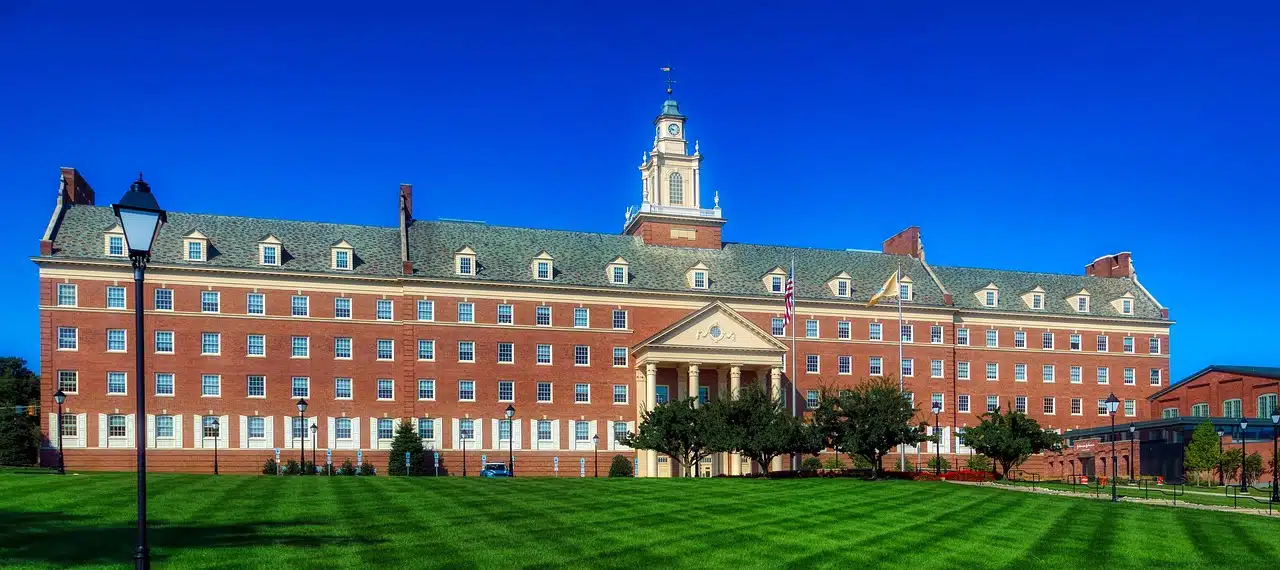
Middlesex County’s identity has been shaped by its position as a transportation crossroads, academic center, and industrial hub.
Located in central New Jersey, Middlesex County sits along the Raritan River and between major travel corridors linking New York City, Philadelphia, and the Jersey Shore.
The county’s history reflects layered settlement patterns, commerce tied to waterways and rail lines, and the growth of major educational and research institutions. Today, Middlesex blends historic urban cores, suburban residential communities, corporate campuses, and university-driven innovation.
The region continues to evolve, but the geographic role remains the same: Middlesex is a connector county.
Table of Contents
Early Settlement and Colonial Foundations
The land was originally inhabited by Lenape communities who made use of the river valleys, forests, and tidal marshlands.
The Lenape traveled along the Raritan and Millstone Rivers, fishing, cultivating land seasonally, and maintaining trade routes that would later guide colonial expansion. European settlers arrived in the mid-1600s, most notably from Dutch and English colonies in New Amsterdam and New England.
The arrival of settlers led to the establishment of farm tracts, mills, and trading posts along the river basin.
Establishment of the County
Middlesex County was officially formed in 1683, making it one of the oldest counties in New Jersey. Its county seat, New Brunswick, developed early as a commercial and administrative center because of:
- Its river port location
- Ferry crossings and early roads
- Access to inland and coastal shipping routes
New Brunswick’s Early Role
By the early 1700s, New Brunswick had become a key point on the King’s Highway, a colonial thoroughfare connecting Boston to Charleston.
Inns, warehouses, and trade services grew around the route, solidifying the town’s role in regional commerce. Travel determined settlement, and settlement shaped everything that followed.
Revolutionary Significance
The county’s strategic position placed it directly within the movement of troops and political activity during the American Revolution.
New Brunswick saw occupation, retreat, and supply movement. The Raritan River’s crossings and riverfront access made the town a practical military link between northern and southern theaters of the war.
Rutgers Connection to Early American Leadership
Founded in 1766 as Queen’s College (later Rutgers University), the institution became a focal point of intellectual and civic development. Its presence fostered a culture of public debate, religious influence, and eventually scientific research.
Preserved Sites
- East Jersey Old Town Village (Piscataway) preserves reconstructed and relocated buildings that reflect early settlement forms.
- Cornelius Low House (Piscataway) interprets regional history through rotating exhibitions.
These sites provide visible linkage between early county history and present-day community life.
Industrial Expansion and Transportation Corridors
The 19th and early 20th centuries transformed Middlesex into a manufacturing and distribution center.
Factories, machine shops, chemical plants, ceramics manufacturers, and mills developed along the Raritan River and later alongside rail lines. The emerging railroad network connected the county directly to economic hubs across the Northeast.
Rail Networks and Growth
NJ Transit’s predecessors established major stops in:
- New Brunswick
- Perth Amboy
- Metuchen
- Woodbridge
Rail access reshaped where people lived and worked.
Perth Amboy developed as a port city, Metuchen as a commuter-oriented township, and Woodbridge as one of the earliest structured suburban municipalities in the state.
Industry and Innovation
The county became known for:
- Ceramic and clay products (notably in Sayreville)
- Chemical and pharmaceutical manufacturing
- Port services and refinery operations near the Arthur Kill
Industrial clusters grew around transportation rather than being confined to one town. Movement and manufacturing always intersected here.
Suburbanization, Higher Education, and Regional Identity
Post–World War II population growth led to housing expansion, shopping corridors, infrastructure upgrades, and broader municipal development.
As highways such as the New Jersey Turnpike, Garden State Parkway, and Route 1 expanded, Middlesex County became a residential and commercial crossroads. This development shifted daily life patterns toward car-based commuting and regional shopping districts.
The Rutgers Influence
Rutgers University expanded significantly after mid-century, developing campuses in New Brunswick and Piscataway. The university system:
- Anchored biomedical, engineering, and pharmaceutical research
- Supported a large student, faculty, and professional community
- Catalyzed redevelopment projects in downtown New Brunswick
Pharmaceutical and Biotech Presence
Major companies established campuses throughout the county, contributing to the area’s reputation as a center for research and applied science. Corporate office clusters in New Brunswick, Piscataway, Edison, and Bridgewater (just beyond the county line) reflect this workforce.
Municipal Character Across the County
The county includes diverse municipalities, each shaped by different historic and economic influences.
New Brunswick
- County seat
- Transit hub
- Rutgers campus core
- Concentration of medical and research facilities (RWJ University Hospital, Rutgers Biomedical)
Edison
- Major suburban residential and commercial center
- Sites linked to Thomas Edison’s Menlo Park laboratory history
Piscataway
- University expansion, corporate research, and preserved green space corridors along the Raritan
Woodbridge Township
- One of the oldest settled areas in the state
- Multi-district township with strong residential identity
Perth Amboy
- Historic port city with waterfront access, Spanish and Portuguese cultural influence, and evolving residential redevelopment
Parks, Trails, and Natural Areas
Despite industrial and residential density, Middlesex County maintains significant preserved natural space.
Key outdoor destinations:
- Rutgers Gardens and Helyar Woods (New Brunswick/Piscataway edge)
- Raritan River Greenway walking and biking network
- Roosevelt Park in Edison, with trails and seasonal events
- Cheesequake State Park (adjacent in neighboring county but regionally tied)
The county’s outdoor network emphasizes river access, wetlands, and layered ecological zones.
Things to Do for Visitors and Residents
Middlesex County offers historical tours, cultural institutions, campus events, international dining, and accessible parks.
Recommended experiences:
- Walk downtown New Brunswick along George Street and College Avenue
- Tour Rutgers Geology Museum and Zimmerli Art Museum
- Visit East Jersey Old Town Village for early settlement interpretation
- Explore Highland Park and New Brunswick for independent cafés and bookstores
- Try Portuguese, Indian, Korean, Pakistani, Dominican, and Mexican dining across Edison, Iselin, Woodbridge, and Perth Amboy
The county’s dining culture is broad, reflecting sustained immigration and international student presence.
Final Thought
Middlesex County’s role as a connector—geographically, culturally, and academically—defines its past and present.
Its river systems, transit lines, and research institutions made it central to New Jersey’s growth. Today, the county remains dynamic, diverse, and closely tied to regional movement, innovation, and community development. Its history is visible not just in preserved buildings, but in the way people continue to move through and learn within it.